Family Adventures in Sri Lanka: Wildlife, Surfing, and Travel Tips

Follow our travels on Instagram

Explore our family’s journey through Sri Lanka, featuring dolphin watching, surfing lessons, and essential travel advice for parents.

Sri Lanka might be small, but it packs an unbelievable punch — and honestly, it’s easily one of the best places we’ve ever visited. If you’re thinking about taking kids, do it! It’s such a brilliant family destination.

We spent a month there in November/December. Since it was our first trip (with many more to come, I’m sure!), we decided to follow the classic tourist trail… mostly. We skipped a few of the usual stops — like Yala National Park — and threw in a few adventures of our own, like dolphin watching in Kalpitiya (highly recommend!).
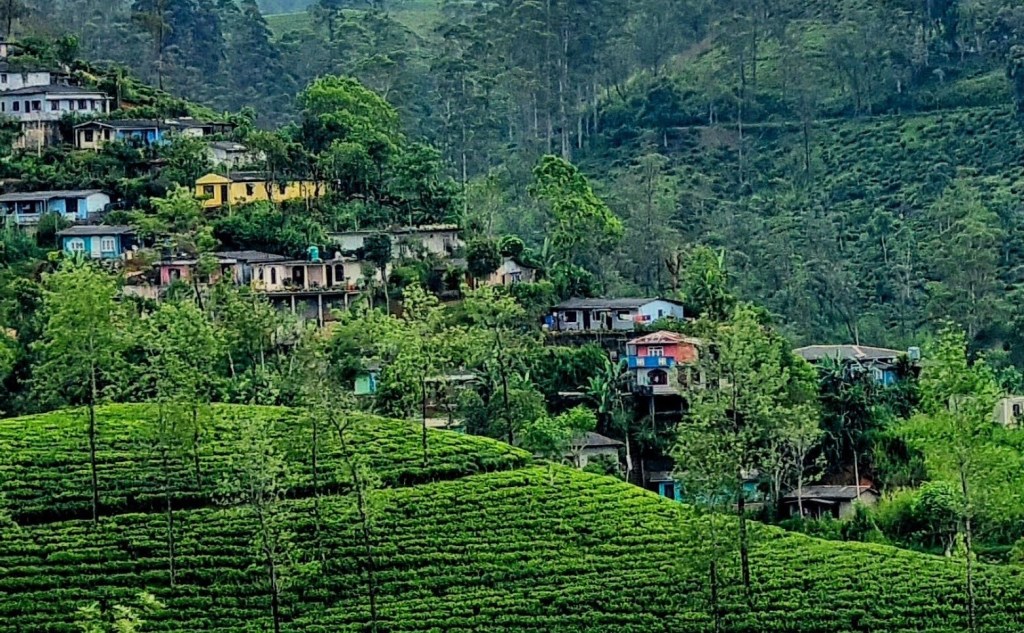
It was one of those trips that sticks with you — colourful, exciting, full of moments that we still talk about all the time. So here is an overview of what we think are Sri Lankan highlights and key things to consider when visiting.

Top Wildlife Experiences in Sri Lanka

Sri Lanka feels like one vast, open-air wildlife sanctuary—everywhere you turn, there’s a new opportunity to experience nature up close. During our trip, we went dolphin spotting, whale watching, and even ventured out on two unforgettable safaris.

One of the absolute highlights was watching spinner dolphins off the coast of Kalpitiya. The water was calm, the boats were few, and it felt like we had the ocean to ourselves. We were surrounded by hundreds of these playful dolphins—it was magical, and best of all, it didn’t feel intrusive or rushed. We arranged this through the hotel we were staying at and had the boat completely to ourselves.

We visited two national parks during our trip: Wilpattu and Minneriya. In Wilpattu, we were fortunate to spot a sloth bear, a leopard, and several elephants. However, the full-day safari proved to be quite long, and we decided we’d probably opt for shorter safaris in the future. At Minneriya, we took an evening safari from Sigiriya and were amazed to see hundreds of elephants. The experience was peaceful, quiet, and truly beautiful — we had the rare privilege of watching the elephants with no one else around. Later, I read that this wasn’t even the peak season for elephant sightings in Minneriya, which made us feel even luckier to witness so many in such a serene setting.

While in Mirissa, we went on a whale watching tour and were thrilled to spot a blue whale — the largest animal on the planet. Sri Lanka is considered one of the top destinations in the world for blue whale watching, especially off the southern coast near Mirissa, where sightings are common during the season.

Surfing Lessons for Kids: What to Expect

This was an absolute highlight for our kids, who had surfing lessons every day for two weeks—and loved every minute of it. The sea is warm, the conditions are generally safe, and the lessons are surprisingly affordable. We simply walked down to the beach and found local surf huts offering sessions, which worked perfectly in both Hiriketiya and Weligama.

That said, sea conditions can vary with the seasons, so it’s worth considering the time of year, especially if you’re travelling with younger children (ours were 8 and 10). Out of season, the waves can be rougher, making it less suitable for kids.

Be aware of the weather

During the UK summer months, the west and south of Sri Lanka—popular tourist destinations—experience their monsoon season. When we visited in November and December, we did encounter some rain, but also enjoyed stretches of beautiful weather in these regions. In contrast, the north and east typically have better weather during the UK summer. It’s something to keep in mind if you’re planning a beach holiday, as the weather and sea conditions can affect your experience during these seasonal shifts.

Navigating Sri Lanka Without a Private Driver

I often see hundreds of posts asking whether it’s necessary to hire a driver when travelling around Sri Lanka. From our experience, we chose not to—and I genuinely don’t think it’s essential, or even the best way to explore the country. While many travellers were arriving at hotels in air-conditioned cars, driven from one destination to the next, we felt that approach missed one of the most rewarding aspects of travel: real connection with the place and how it functions. Of course, many people go with this option for ease but if you’re wondering if you need it, you don’t.
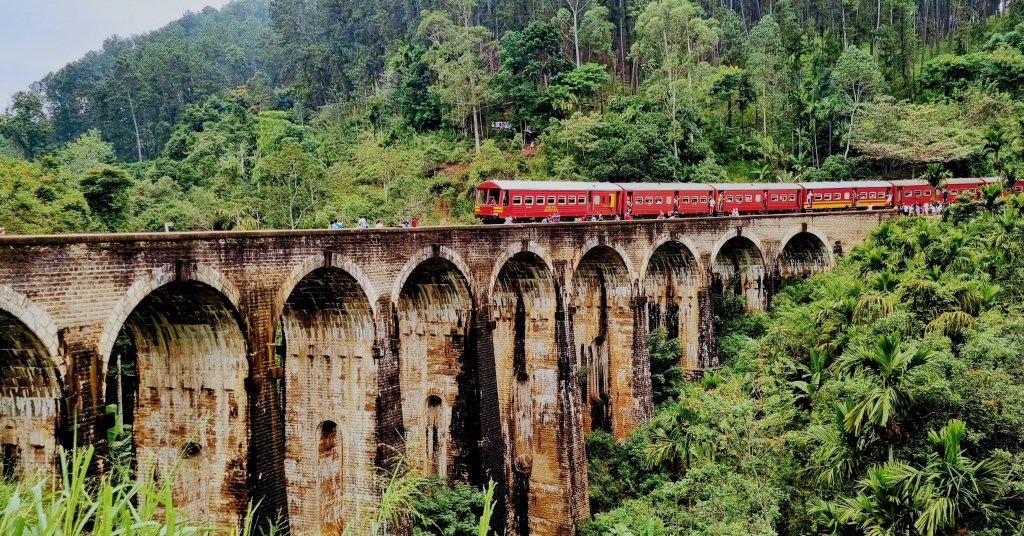
We did use taxis arranged through hotels when there were no other options, but wherever possible, we opted for tuk-tuks, trains, and buses. We always try to use public transport when we travel, as it offers a glimpse into everyday life that you simply don’t get from behind tinted windows. Booking tickets was usually straightforward— for the buses we just turned up and for the trains, most of the time we just turned up at the station, but for busier routes, we booked in advance here.
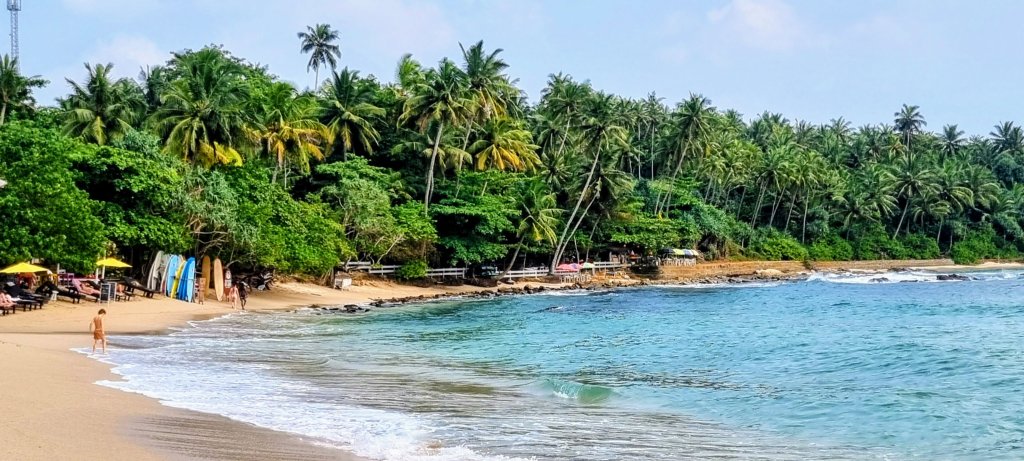
Sri Lanka offered our family a memorable blend of adventure, culture, and relaxation. From spotting dolphins in Kalpitiya to daily surf lessons along the southern coast, each stop brought something new without feeling rushed. Travelling without a private driver gave us the flexibility to explore at our own pace and connect more closely with local life. With its varied landscapes, welcoming communities, and family-friendly experiences, Sri Lanka proved to be an exciting yet accessible destination – one we’d happily recommend to other families looking for something a little different.

Essential Albania Travel Tips: Currency, Driving, SIM Cards & More

Follow our travels on Instagram

Planning a trip to Albania? Here’s everything you need to know before you go—from currency exchange and border crossings to mobile SIM cards, car rentals, and driving laws. This guide will help you travel with confidence and avoid surprises.

1. Currency and Payments in Albania

While using a card is sometimes possible, it’s highly unreliable and definitely not something you can count on. We had to pay for petrol with cash more than once, and I wasn’t able to use my phone at all

You can’t get Albanian Lek outside of Albania as it’s a closed currency, and once you leave the country, it’s difficult—if not impossible—to exchange it back to your home currency. Euros, however, are widely accepted, so I recommend bringing cash in euros and exchanging it at the airport upon arrival. At the time of writing, the exchange rate was around 1 euro to 100 Lek, and that rate stayed fairly consistent.
On top of that, withdrawing cash in Albania is more expensive than anywhere else we’ve travelled. If you do need to take out cash, never accept the bank’s offered exchange rate. You’ll usually be given the option—just press ‘No’ to decline their rate. This tip can save you money almost anywhere, but we found it especially important in Albania.

2. Driving in Albania: What You Need to Know

You might hear that driving in Albania is risky, but that wasn’t our experience at all. While city traffic can be a bit hectic and requires your full attention, once you’re beyond the urban centres, the roads are generally calm and easy to navigate. Renting a car is straightforward, with plenty of options available right at the airport.

We paid around €410 for a two-week hire car, which included an additional €23.50 per day for comprehensive “no-questions-asked” insurance. We chose this extra coverage after hearing some warnings about driving conditions—but in the end, we never needed it. Still, the peace of mind it provided was well worth it.

3. Border Crossings and Documentation

You will need the permission of the hire car company to cross into any of the countries bordering Albania. It’s straightforward to do, but at the border they will ask for your car paperwork and you will need proof of permission. It was €50 (included in the price mentioned above). At the border with Montenegro you will also need a green card for your car (€15, slightly more in Lek). You can get it there and it’s very simple. Border crossings are not a hassle but they do take a bit of time.

4. Staying Connected: SIM Cards and Mobile Data

We do this everywhere we go now. It is hassle free and makes so much difference to us on a practical level. As Albania is not in the EU, those coming from the UK (like us) generally will not have it included in their existing data package. We just get them at the airport and it was around €25 for 40gb.

5. Safety and Law Enforcement Presence

We didn’t get stopped at all on the roads and there’s no reason why you should have any problems, but the police were definitely a presence and usually stopping people for speeding. If people flash you or gesture to you when you’re driving, it is likely there are police ahead. Keep to the speed limits, carry all the documentation you need and you’ll be fine.

6. Fuel Costs and Availability

Petrol was noticeably expensive compared to other local prices — likely on par with, if not slightly more than, what you’d pay in the UK, where it’s already considered costly. There were plenty of petrol stations around, but it’s worth noting that some, especially in more rural areas, only accepted cash.

7. Don’t always believe Google maps

Google maps took us some very strange ways at times. We use the Maps app all the time and usually it is fine but if your instinct in telling you to not go up that very narrow cobbled road when you’re looking to go downhill and onto the main road, consider going with your gut.

8. The vegetarian scene is limited

We have several vegetarians in our family, and while we were able to find something to eat, the choices were definitely limited. Let’s just say it’s a good thing we enjoy margarita pizza, Greek salad, and vegetarian souvlaki — because those ended up being our go-to meals more often than not! Not that I’m complaining, I could live on souvlaki.

Albania is a country full of surprises—rich in culture, natural beauty, and warm hospitality. While some aspects of travel here may differ from other European destinations, being prepared with the right information can make your experience not only smoother but far more enjoyable. From navigating border crossings and understanding local currency to staying connected and safe on the roads, these practical tips are designed to help you travel Albania with confidence. Whether you’re road-tripping through the mountains, exploring coastal towns, or just passing through, a little preparation goes a long way in making the most of your Albanian adventure.

Top Family Adventures in Indonesia: Highlights from Our Journey

Follow our travels on Instagram

Some of the experiences we’re calling “highlights” might seem a little unconventional—but stick with me! Indonesia, with its breathtakingly diverse landscapes and rich cultural tapestry, offers endless adventures for families. Over two unforgettable months, we explored everything from misty volcanic peaks to tranquil island beaches, encountering surprises and moments of wonder at every turn. This beautiful country treated us to an incredible range of experiences—some expected, others completely unexpected—all of them memorable.

1. Mount Bromo at Sunrise

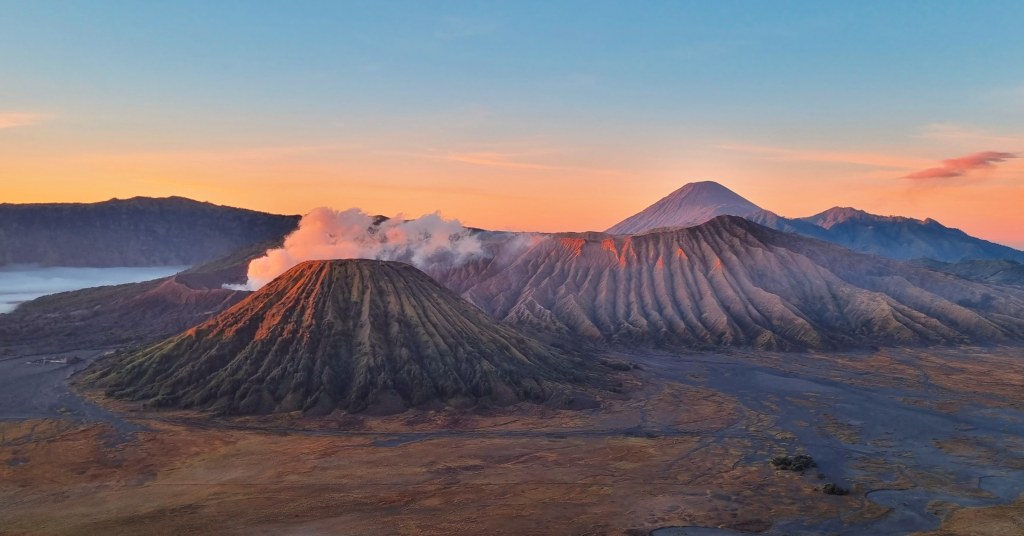
Indonesia is just one of those places that constantly takes your breath away, and Mount Bromo was no exception. Watching the sunrise over the volcano was absolutely surreal—one of those moments that makes you stop and go, Wow, is this even real? It’s hands down one of my favourite memories from the trip.

2. Swimming with Turtles in the Gili Isles

This really was a highlight and an unforgettable. No tour or boat, just walk into the water from the shore and soon enough we found several turtles. The kids were totally mesmerised, as were we. If you venture to the Gili isles then this really is worth seeing.

3. Scuba Diving in Northern Bali

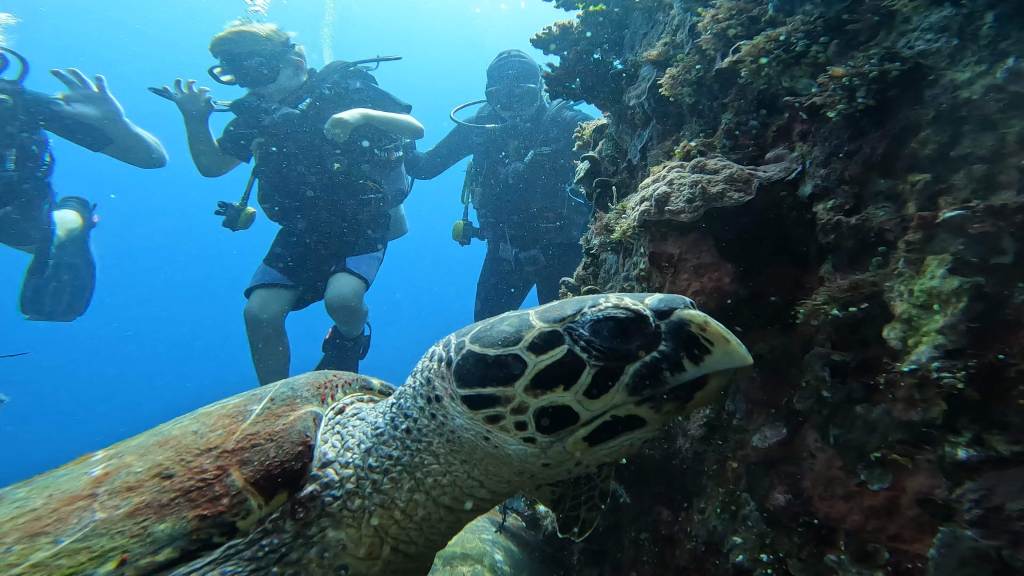
Years ago, before kids, I did a wreck dive in Northern Bali, and I’d always wanted to go back. This time, my 10-year-old got to experience it too! Northern Bali is way more chilled out than the south—no crowds, no chaos, just incredible diving. We spotted turtles, sharks, and had the whole underwater world almost to ourselves.

4. Karimunjawa

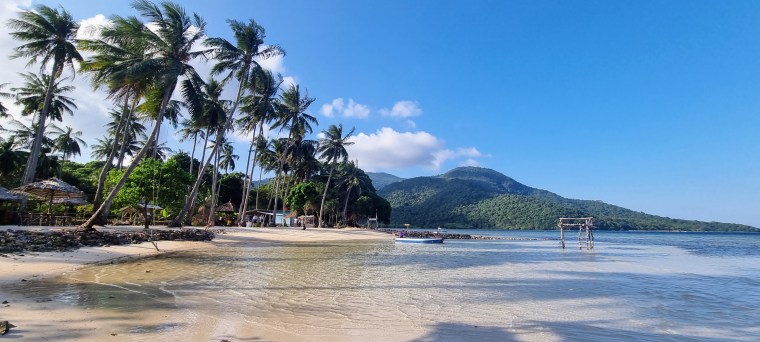
I hesitate to even mention this place because it’s such a hidden gem. Seriously, it’s paradise—untouched, pristine, and barely touched by tourism. The journey there is a bit rough (yes, they hand out sick bags on the ferry), but it’s beyond worth it. We rented mopeds and explored the island, and it was stunning. There’s not a ton to do in terms of tourist attractions, but that was kind of the point—it was just raw, natural beauty.

5. Seeing Banda Aceh

Visiting Banda Aceh was one of the most moving and educational parts of our journey. It’s a place forever marked by the 2004 tsunami, and standing in a city that has so visibly rebuilt itself from such devastation was both humbling and inspiring. We visited the tsunami museum and saw the boats carried inland by the waves—a powerful reminder of nature’s force and human resilience. For all of us, especially the kids, it was a chance to learn about the disaster not just through facts and figures, but through stories, memorials, and the strength of the local people. It sparked important conversations about natural disasters, global response, and the courage it takes to rebuild, turning a distant headline into something deeply real and human.

6. Bukit Lawang

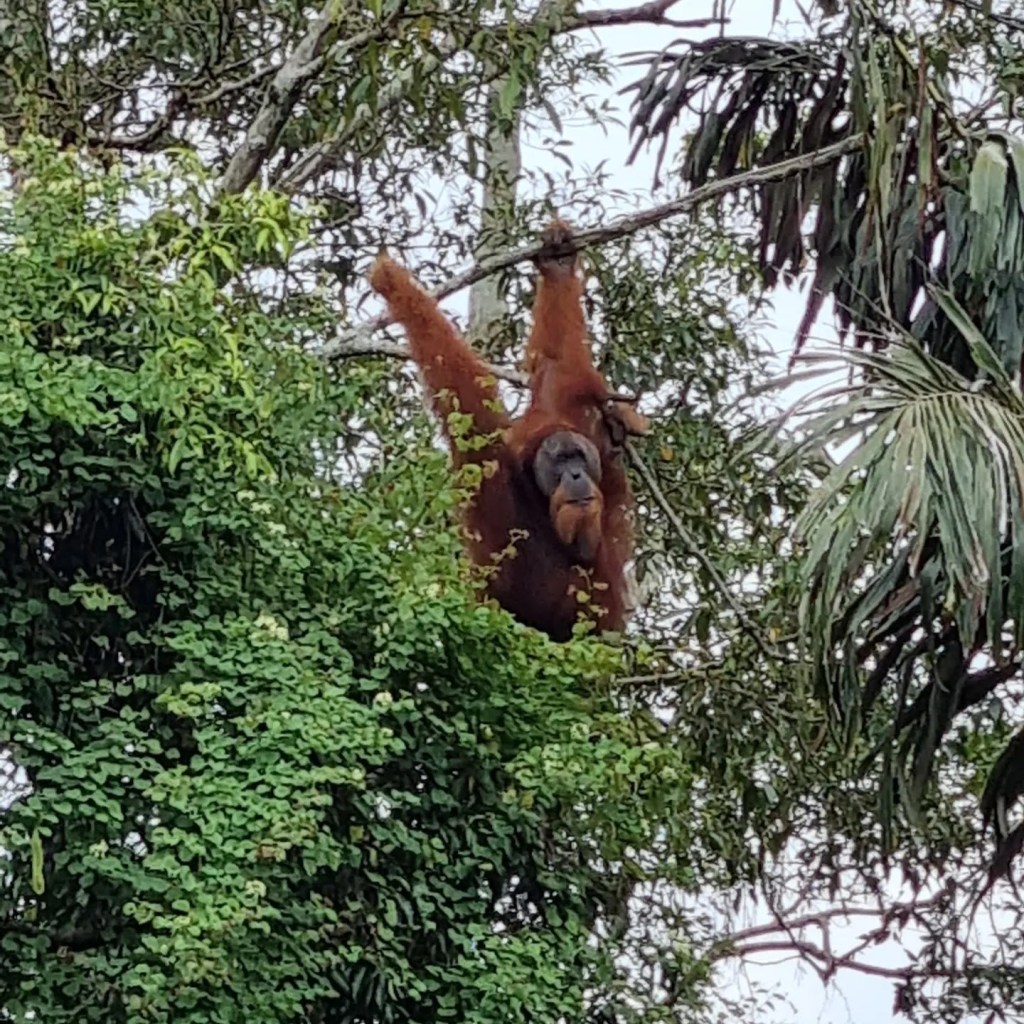
Sumatra felt like a different world compared to Bali or Lombok—far more traditional and way less touristy. We stayed in the jungle in Bukit Lawang, which meant a 15-minute walk from the road just to get to our hut, but honestly, it was all part of the adventure. The best part? Seeing wild orangutan. We decided on a day trek as non of us were really into the idea of wild camping in a jungle and it was actually perfect for us. Just the right amount of walking before the kids started to get tired and then the tubing back down the river at the end was the perfect end to the day. The orangutan were majestic, graceful, gentle and utterly mesmerising. It is heartbreaking that so much of their natural habitat is being destroyed but equally inspiring to see the efforts of the local people to preserve what is left. It was an absolutely unforgettable few days.

6. Komodo National Park day trip

Our day in Komodo National Park was one of the real standouts of the trip and definitely something we’d recommend. We joined a fairly typical group boat with about 25–30 people and spent the day exploring some of the park’s key spots. It started with a walk up to one of the park’s highest points, where we were met with incredible views over the surrounding islands and volcanic landscape. From there, we headed to Komodo Island to look for Komodo dragons—and seeing them up close in the wild was an unforgettable experience. We also stopped at the well-known Pink Beach, where we had time to relax on the unusual rosy sand, swim in the clear turquoise water, and snorkel among a reef full of fish. A real highlight was getting the chance to swim with manta rays—huge, graceful creatures that passed right beneath us. It was a full, memorable day with just the right mix of activity and downtime.

7. Travelling for Hours through Palm Oil Plantations

Driving through Sumatra, one of the most striking—and sobering—sights is the endless expanse of palm oil plantations. Stretching for miles, these uniform rows of trees have largely replaced what was once lush, biodiverse rainforest. It’s a stark reminder of the environmental challenges facing this region, particularly for endangered species like orangutans who are rapidly losing their natural habitat. For our family, it sparked incredible and in depth conversations—not only about the environment, but also about the complex realities for the people who depend on palm oil for their livelihoods. Nothing about the situation is simple. This was worldschooling at the absolute coal face—an unfiltered look at the difficult questions shaping our planet’s future. Our kids didn’t just read about it—they stood in the middle of it, asked the hard questions, and experienced it firsthand. I do say it was a highlight because it was a light bulb moment for me. We’d taken our kids out of school to travel the world, and the questions they asked—and the lessons they learned—about deforestation, sustainability, and the complex challenges facing local communities were nothing short of priceless. These weren’t abstract classroom concepts; they were real, unfolding in front of them, sparking curiosity, compassion, and a deeper understanding of the world they’re growing up in. If anything convinced me that travel is worth it, this was it.

How we afford to travel

Mountains in Switzerland

Follow our travels on Instagram

People often ask us how we manage to travel as much as we do. After all, we have regular jobs, three kids, a mortgage in the UK, and certainly no secret stash of cash. Some think we’ve won the lottery (we haven’t), while my niece is convinced we’re spies (we’re not—though that would be pretty cool). The truth? We prioritise travel, make smart choices, and take advantage of every opportunity to explore.

We travel as much as possible, though plenty of families travel more—some even full-time! Since we’re tied to school holidays (thanks to our jobs as a teacher and a university administrator), we often face higher prices. But with a little strategy, it’s still totally doable. Here’s how we make it work:

1. We Follow the Cheap Flights

Our biggest tip: let the deals decide where you go! We use Skyscanner religiously (browsing is basically a hobby at this point) and book flights based on where we can go for the lowest price. Not only does this save money, but it also adds an element of adventure—we’ve ended up in places we might never have considered otherwise!

2. We Book Super Early

If you want the best prices, in general, book well in advance, particularly if you’re restricted to school holidays. As I sat in Spain this February, I was already hunting for flights for next February—and trust me, the deals were worth it!

3. Travel Is Our Priority

For us, travel comes before buying new clothes (for us parents), cars, or meals out. Most of our disposable income goes towards exploring the world. We bought an affordable house with minimal upkeep (probably not enough, if I’m honest), we stick to budget airlines, take stopovers for long-haul flights, and embrace experiences over luxuries. Seeing our kids recognise the call to prayer or say “thank you” in another language? Priceless.

4. We Travel to Affordable Destinations

We rarely visit expensive places because doing so would mean travelling less. We skip package holidays, all-inclusives, and pricey resorts (we’ve never even been to Centre Parcs! Although I hear the Center Parcs in Europe is cheaper). Ski trips? Not really our thing—and also not in the budget. SE Asia is one of our favourite budget destinations but City breaks in Europe can also be super affordable too.

5. We Stay in Self-Catering Accommodation

We love having the option to cook our own meals. That doesn’t mean we never eat out, we definitely do and love it, but having a kitchen lets us whip up quick, budget-friendly meals when we need to and it’s really useful for breakfast before we head out for the day. Plus, apartments are often cheaper than booking two hotel rooms! We usually use Booking.com or Airbnb

6. We Stay in Central Locations

Being within walking distance of cafés, restaurants, landmarks, and public transport is a game-changer. It saves time and cuts down on transport costs, making a slightly pricier central stay worth it in the long run.

7. We pack light

We’ve learnt the hard way—packing too much is a waste. Now, we’re strict about what we bring and usually stick to just a small carry-on. Easter in Europe? Tricky. But worst-case scenario, we buy a jumper (which has only happened once, even during our five-month trip to Asia).

8. We don’t use tours or packages

Travelling independently is generally cheaper than booking tours or packages because you have full control over your budget. You can choose budget-friendly accommodation, use public transport instead of expensive private transfers, and eat at local restaurants rather than tourist-focused spots. Tour packages often include mark-ups for convenience and profit, whereas independent travel allows you to find the best deals on flights, activities, and accommodation. Additionally, you can avoid unnecessary expenses such as guided tours for attractions that can be explored on your own, further reducing costs.

9. We skip souvenirs

Skipping souvenirs when travelling is cost-effective as it avoids overpriced, often unnecessary purchases. Tourist shops inflate prices, and small costs quickly add up. Instead, prioritising experiences or local cuisine creates lasting memories without extra spending. It also reduces baggage weight, helping to avoid excess luggage fees. Opting for photos and meaningful experiences is a budget-friendly alternative.

10. We Travel on a Budget

We don’t splurge on every meal, particularly in more expensive locations. Lunch is often a supermarket snack, a picnic, or street food (especially in Southeast Asia!). Camping? We pack sandwiches. For some, this might take away the “holiday” feel, but for us, it’s how we make travel happen.

At the end of the day, it’s all about choices. By making travel a priority, being flexible, and sticking to a budget, we’ve been able to explore so many amazing places, even in school holidays. And if you’re dreaming of travelling more—it’s absolutely possible!

Camping in the City of Lights: Our Stay at Camping de Paris

Follow our travels on Instagram

When you think of Paris, camping probably isn’t the first thing that pops into your mind, right? Well, that’s exactly what we thought—until we pitched our tent at Camping de Paris, nestled in the leafy 16th arrondissement along the Seine. Suddenly, we discovered a whole new way to experience the City of Lights. It was affordable, gave the kids plenty of space to run around, and still kept us close enough to all the Parisian magic.

We were on our way back up north to catch our shuttle home, and as we were passing through, we decided to finally check Paris off our list. The kids were always talking about how they’d been to places like Bangkok but never actually visited Paris—so we made it happen, and camping turned out to be the perfect way to do it!

Everything We Needed, Right on Site

The campsite turned out to be way more spacious than we expected, with fantastic, clean facilities and a really relaxed atmosphere. There’s a central lodge where we could kick back, grab a drink, or even borrow a board game for some family fun. On top of that, there’s a restaurant, a handy grocery shop for essentials and during the warmer months, a food truck rolls in with tasty bites.

While we usually cooked up our own meals at our pitch, by the end of the trip, we’re always ready to switch it up and let someone else do the cooking. The on-site restaurant didn’t disappoint—it had a solid menu that catered to both the adults and the kids, making it the perfect spot to unwind without the hassle of grocery shopping or cooking.

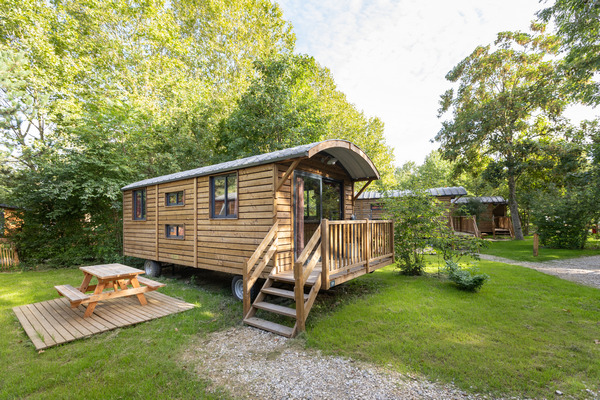
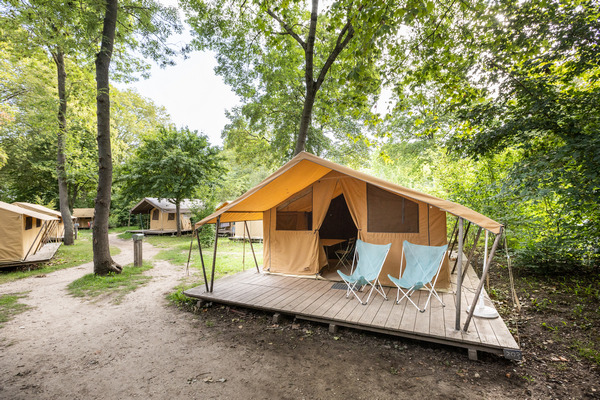
We camped, but there are also chalets, wood trailers and pre-erected canvas tents so there are plenty of options if you’d prefer a little more comfort to an air bed and a little more convenience than having to put up a tent.

Easy Access to the City

The real bonus? Although we were surrounded by nature, getting into the heart of Paris was quick and easy. A shuttle bus runs directly from the campsite to Porte Maillot, where you can hop on the metro and reach major landmarks like the Eiffel Tower and the Louvre in under 30 minutes.

We spent our days sightseeing and our evenings winding down on the campsite—letting the kids ride their bikes, enjoying an apperitif sitting outside our tent in the warmth of the evening and enjoying the rare calm you don’t usually associate with big city trips.

Note: the shuttle doesn’t run too late in the evening, so we made sure to plan our returns accordingly.

Final Thoughts

Our stay at Camping de Paris gave us a completely different kind of Parisian experience. It was relaxed, affordable, and genuinely memorable. We still got to see all the famous sights, but we also had time to slow down, breathe, and enjoy the things we love about camping. We initially booked it because there weren’t any other camping options as close to the centre, but I was really surprised at the quality of the site and the facilites available, all so close to one of the most iconic capitals in the world.

If you’re a family looking for a base that’s calm, convenient, and a little unconventional, we highly recommend it and we’d definitely go back. Paris has never felt more accessible.!

Marseille

Marseille: France’s Gritty, Gorgeous Mediterranean Gem

Perched on the sun-soaked southern coast of France, Marseille is a city that defies clichés. It’s not your polished, postcard-perfect destination like Paris or Nice—but that’s exactly what gives it soul. France’s oldest city, founded by Greek sailors over 2,600 years ago, is a mix of cultures, history, and raw Mediterranean energy.

A Melting Pot of Cultures

Marseille’s identity is deeply rooted in immigration and trade. From North Africa to Italy and the Comoros Islands, its population is one of the most diverse in Europe. That mix is reflected in everything—from the languages spoken on the street to the scent of spices in the air and the rhythm of daily life.

The Vieux-Port (Old Port)

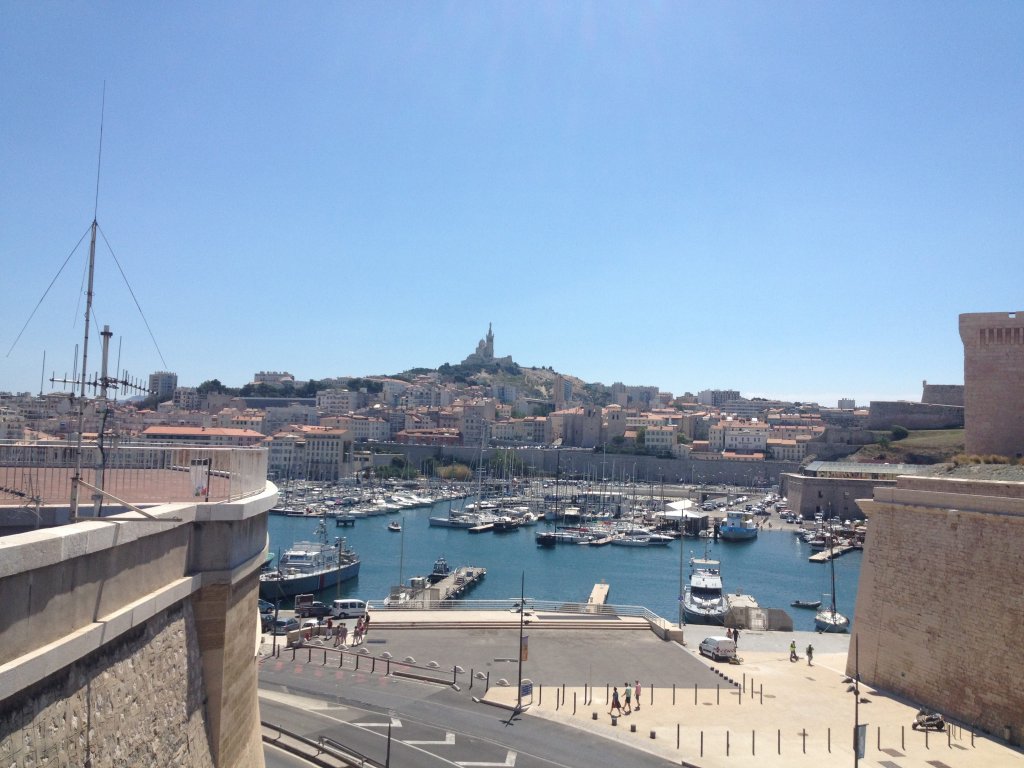
This is where the heart of the city beats loudest. Colourful boats bob in the water, fishmongers sell the catch of the day at dawn, and cafés spill out onto pavements—perfect for sipping a pastis and watching the world go by. It’s been the city’s commercial and cultural hub since antiquity.
La Canebière: The City’s Grand Avenue

One of the most iconic streets in Marseille, La Canebière is often referred to as the city’s “spine.” This bustling, wide avenue stretches from the Vieux-Port to the Réformés district and is lined with grand buildings, shops, cafés, and historic landmarks. It’s a street full of life and energy, offering a glimpse into Marseille’s vibrant past and modern-day hustle. While some parts of La Canebière can feel a bit worn, the street exudes a sense of nostalgia and character that perfectly complements the city’s rugged charm. It’s a great spot for a leisurely walk, where you can admire the architecture, stop for a coffee, and feel the pulse of the city.

Cours Julien: The Bohemiam Heart of Marseille

If you’re looking for a lively, bohemian vibe, Cours Julien is the place to be. Known for its vibrant street art, quirky cafés, and independent boutiques, this district is a creative hub of Marseille. The area has a laid-back, eclectic feel, with colourful murals covering every available surface and a mix of cool bars where the locals gather. It’s a great spot for evening drinks, people-watching, or simply soaking in the artsy atmosphere. The area also hosts a lively weekly market, where you can pick up fresh local produce, handmade goods, or vintage treasures. Don’t forget to check out La Friche la Belle de Mai, a former industrial site turned cultural centre, offering everything from art exhibitions to outdoor concerts and theatre performances.

Hidden Gems in the City

Marseille is full of tucked-away spots that will make you feel like a local. Take a stroll through Le Panier, the city’s oldest district, with its narrow, winding streets and colourful houses that look straight out of a painting. The small squares are dotted with quaint cafés, and hidden courtyards reveal some of the city’s most charming corners. Another must-see is the Palais des Congrès—an unexpected oasis of green and peace tucked away behind the noise of the city, perfect for a quiet afternoon.

Marseille’s City Beaches and Le Lecques

While Marseille is a bustling port city, it’s also home to some surprisingly beautiful urban beaches. Plage des Catalans, located near the Vieux-Port, is the most popular city beach, where locals sunbathe and swim right in the heart of the action. For a quieter escape, head to Plage du Prado, a long stretch of sand perfect for a day of relaxation, picnicking, or a stroll along the seafront. But if you’re willing to venture a little further, Le Lecques—about 45 minutes from Marseille—is a serene beach destination in the neighbouring town of Saint-Cyr-sur-Mer. Known for its crystal-clear waters, golden sands, and relaxed atmosphere, Le Lecques is ideal for a day trip from the city. It’s a fantastic spot for swimming, sunbathing, and enjoying the coastal beauty away from the crowds.

History Meets Modern Cool

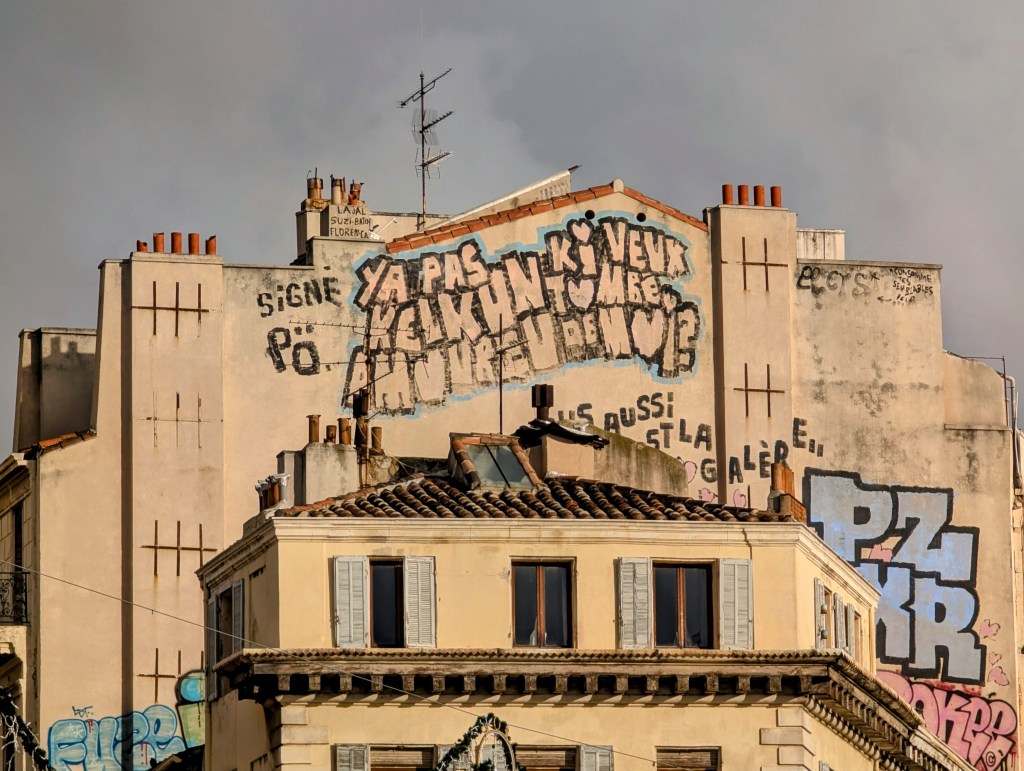
Marseille blends the ancient and the contemporary with ease. Wander the historic Le Panier district with its narrow alleys and pastel façades, then head over to the bold, modern architecture of MuCEM (Museum of European and Mediterranean Civilisations). Street art is everywhere—raw, political, and vibrant.

The Calanques: Nature’s Surprise

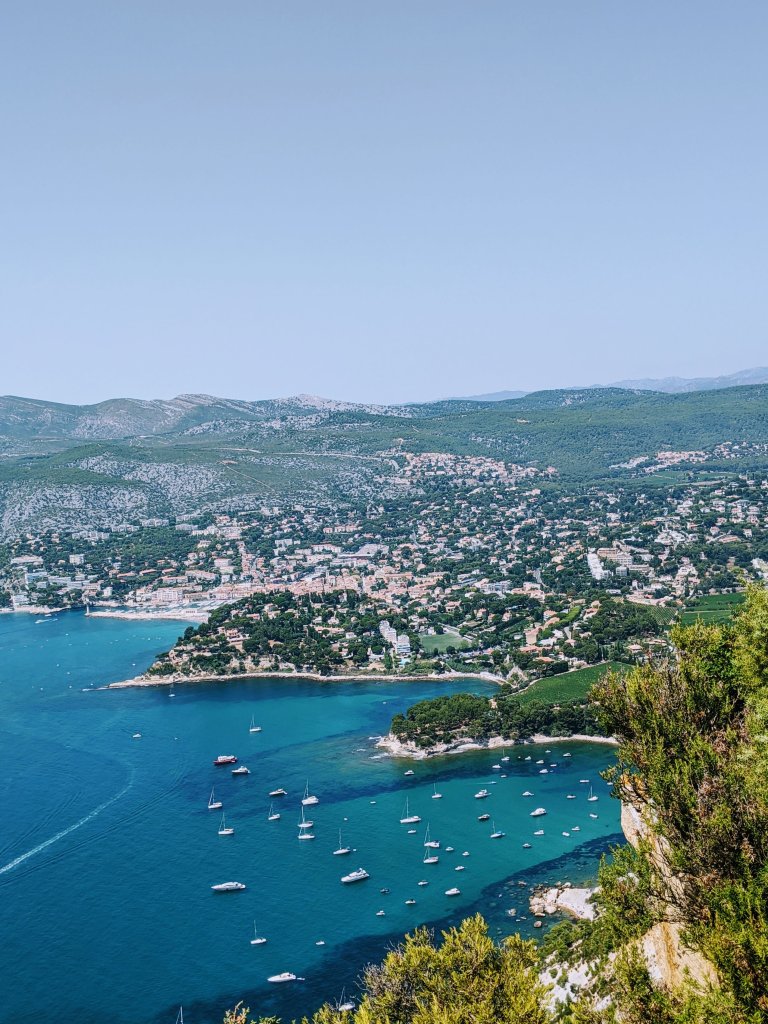
Just a short drive or boat ride from the city buzz, the Calanques National Park offers dramatic white limestone cliffs plunging into turquoise waters—an adventurer’s dream for hikers, climbers, and swimmers.

Food, Glorious Food

You can’t leave without sampling bouillabaisse, the city’s iconic fish stew. But also explore couscous restaurants, North African pastries, and lively markets like Noailles, where French, Maghrebi, and Middle Eastern flavours collide. For a more intimate experience, try the Café de la Banque in the heart of Noailles—a great place to taste traditional dishes, where the flavours of Marseille are celebrated in every bite.

How to get to Marseille

If you’re flying from the UK, Marseille Provence Airport (MRS) is well-connected to several major cities:

  • London: Direct flights are available from London Heathrow (LHR), London Gatwick (LGW), and London Stansted (STN). Airlines such as British Airways, easyJet, and Ryanair offer regular services. Prices can start as low as £23.99 for one-way tickets (easyjet.com).
  • Manchester: Direct flights are available from Manchester Airport (MAN), with airlines like easyJet offering services starting from £191 for round-trip tickets (wwws.airfrance.co.uk).
  • Edinburgh: Direct flights are available from Edinburgh Airport (EDI), with round-trip fares starting from £164 (wwws.airfrance.co.uk).
  • Bristol: Direct flights are available from Bristol Airport (BRS), with fares starting from £23.99 (easyjet.com).

Once you arrive at Marseille Provence Airport, it’s approximately a 25-minute drive or a 30-minute bus ride to the city centre.

Real, Rough, and Unapologetically Itself

Marseille isn’t trying to be anything other than what it is—gritty, proud, beautiful in its imperfections, and endlessly fascinating. It’s a city for travellers who like their destinations with a bit of edge and a whole lot of heart.

Tallinn Christmas Market 2024: A Magical Winter Experience in Estonia

Follow our travels on Instagram

Discover the charm of the Tallinn Christmas Market in Estonia’s Old Town. Explore festive stalls, savour traditional treats, and immerse yourself in a winter wonderland perfect for families.

After going to Vilnius and Riga earlier on in the year, I was really keen to go to Estonia and I heard the Christmas market there could be a perfect first trip.

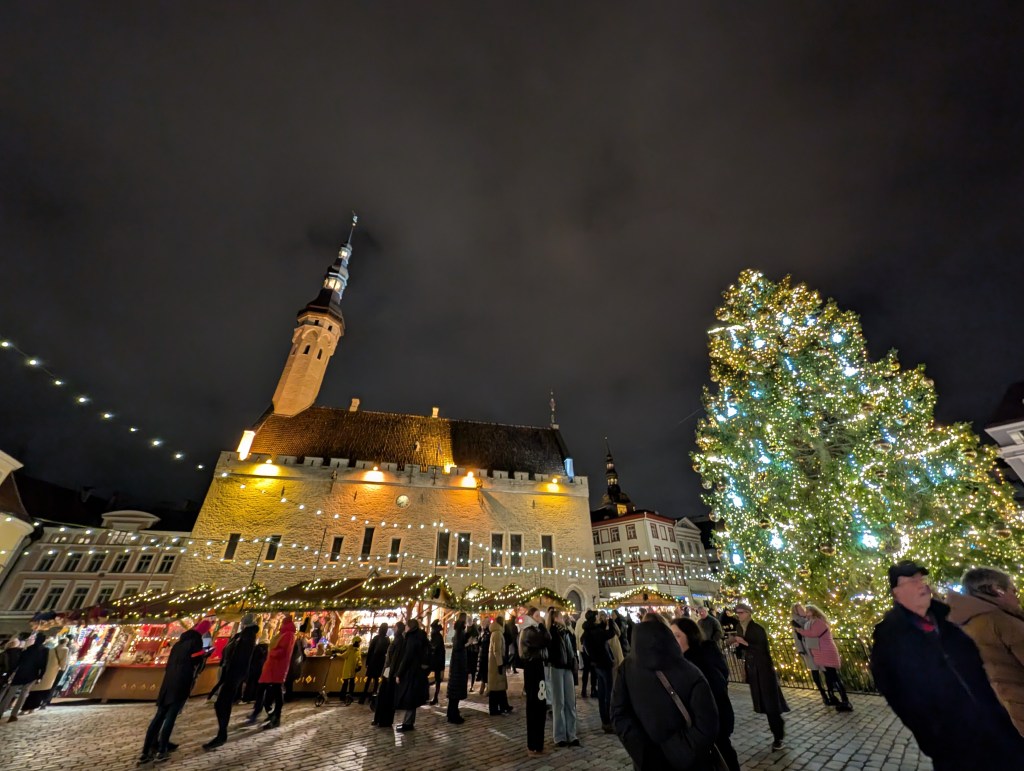
The Tallinn Christmas Market, held in the city’s medieval Town Hall Square, is a popular winter event featuring local crafts, seasonal food, and festive lights. Set against the backdrop of historic buildings and a large Christmas tree, it offers a cosy, low-key Christmas experience in the heart of the Old Town. I took my daughter, Megan, at the end of November for a quick two-night break, and while we didn’t get any snow (sadly!), we still completely fell in love with Tallinn. The market’s relaxed, storybook atmosphere felt magical without being overwhelming—something she’s already asking to do again next year. It’s the kind of trip that feels like the start of a lovely new Christmas tradition. Below is an overview and some general thoughts, in case you’re planning your own trip to the Baltics for a festive getaway.

Where to stay

We stayed inside the walls of the old town and I was really pleased we did. I found this really cute, warm, and cosy apartment on Booking.com that turned out to be perfect for the two of us. It had everything we needed, with a welcoming vibe that made it feel like a little home away from home. The best part? It was just a three-minute walk from the Christmas market, which made it super easy to pop in and out throughout the day. Being right in the heart of the Old Town, the location couldn’t have been better—cobbled streets, historic buildings, and that festive charm around every corner.

What to expect

If you’re looking for a huge, bustling Christmas market packed with crowds and nonstop action, Tallinn might not tick all the boxes—but that’s exactly why we loved it. The market has a smaller, more intimate feel, with just the right amount of festive charm. Maybe it was because we visited earlier in the season, but the atmosphere was calm and relaxed—we could browse the stalls, grab a bite to eat, and soak up the twinkling lights without ever feeling rushed or overwhelmed. It’s definitely a market you can see in one evening, so if you’re after a longer trip, consider pairing it with a few days in Helsinki or Riga—both are just a ferry or short flight away. That said, we did notice some of the stalls changed over the couple of days we were there, which kept things fresh and made it worth going back for another wander. Also, it just feels like a nice place to hang out and grab a mulled wine!

Tips for Visiting with Family

Wander around the town

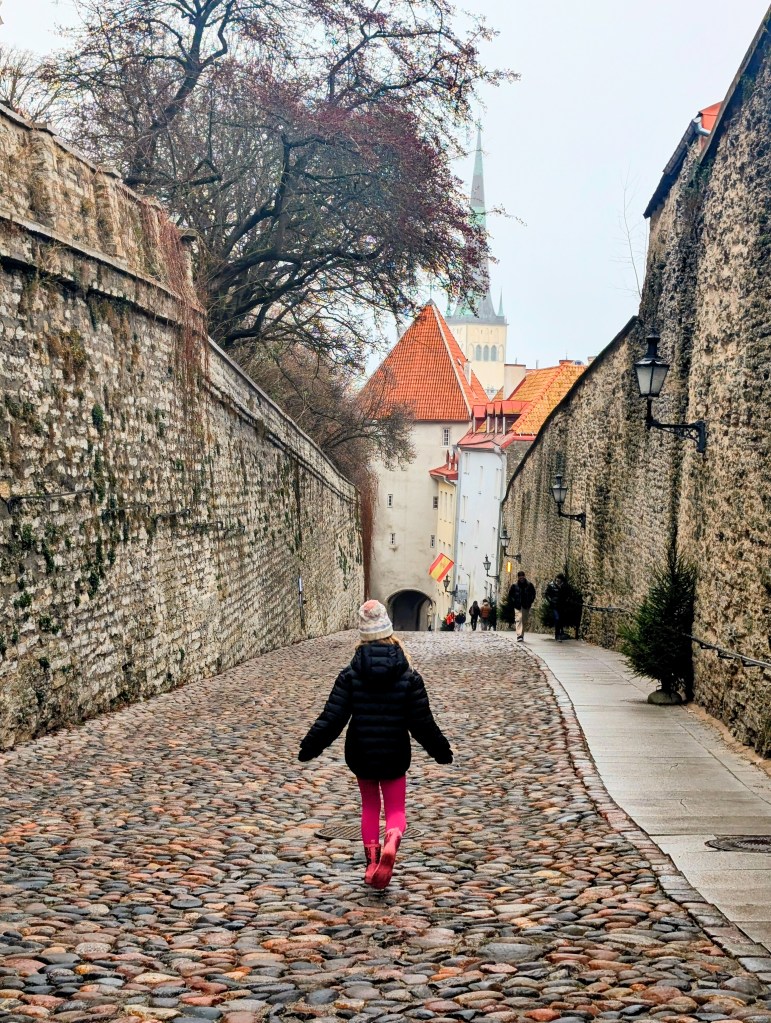
Beyond the magic of the Christmas market, Tallinn itself is a dream to wander through. Even though we caught it on a gray, drizzly day, the charm of the old town still shone through—and I can only imagine how magical it would be under a fresh blanket of snow or with a bit of winter sun lighting up the rooftops. Take some time to stroll along the ancient city walls and lose yourself in the winding cobblestone streets. There’s a real fairy-tale feel here, with medieval towers poking up between colorful buildings, ivy-covered archways, and tucked-away courtyards that make you feel like you’ve stepped into another era. One of the best things you can do is just wander with no agenda—chances are, you’ll stumble upon a cozy little café, a quirky boutique, or a breathtaking view from one of the city’s many lookout points.

Take day trip to Helsinki

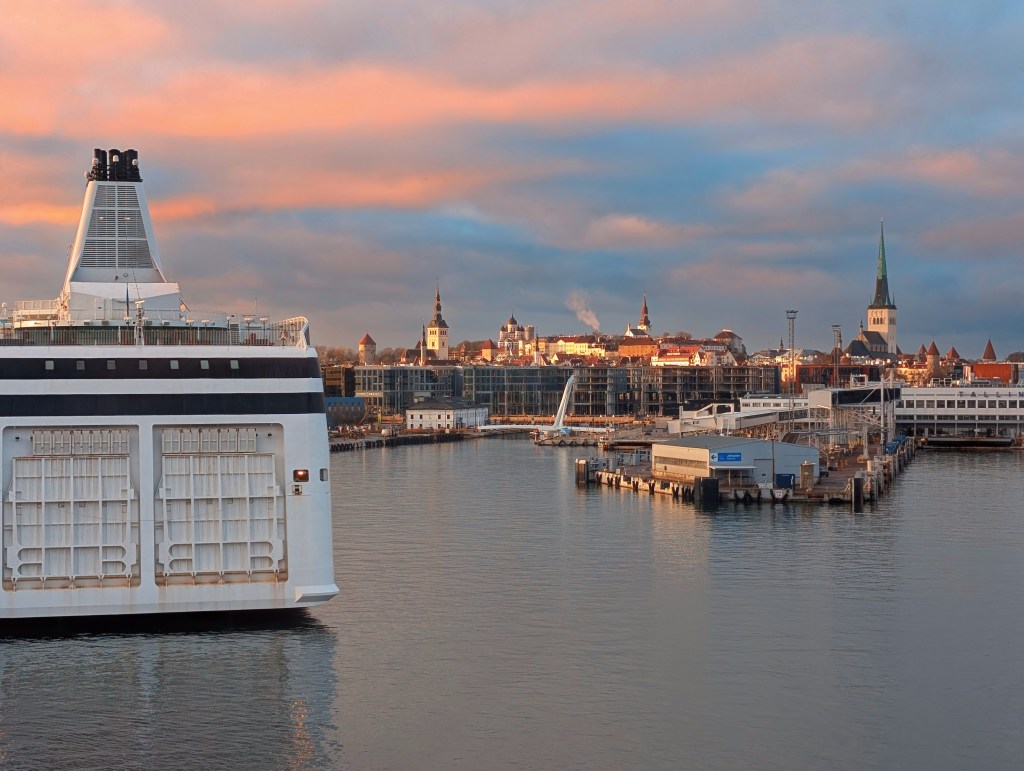
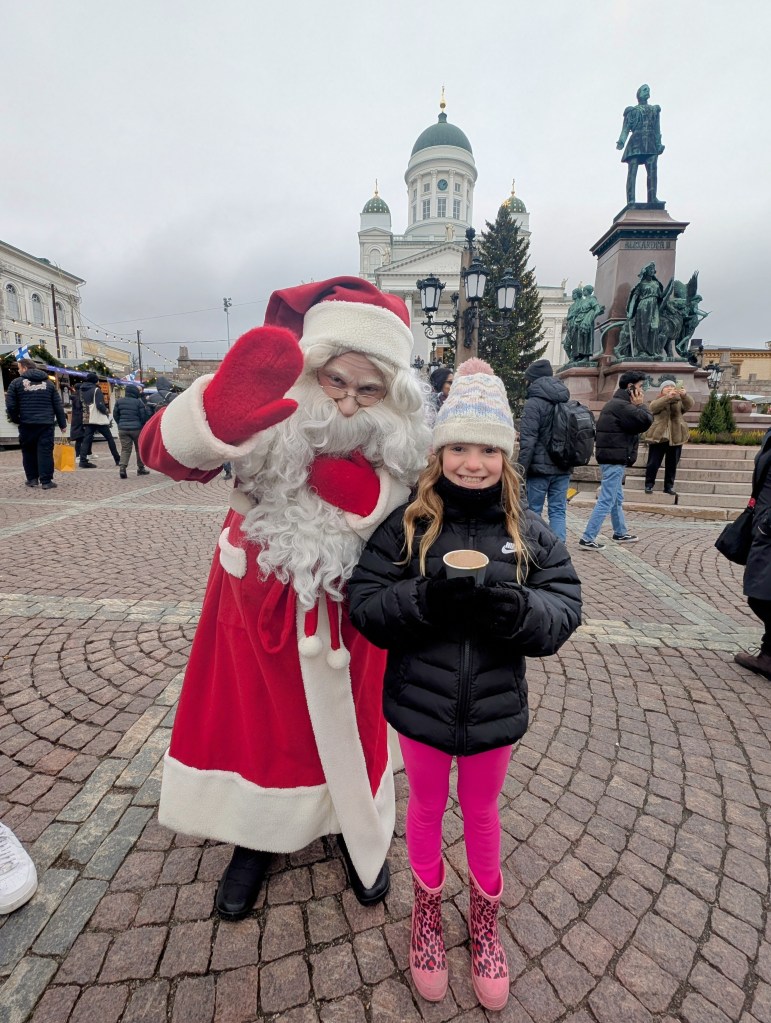
Megan is the kind of person who’s always on the go so even though we were only in Tallinn for a couple of days, she was determined to make the most of it. We found ferry tickets to Helsinki online here and before we knew it, we were sailing across the Baltic. The tram from the ferry terminal in Helsinki took us straight into the heart of the city, which made things super easy. The Christmas market there wasn’t quite what we hoped for—less festive and a lot more crowded than Tallinn’s—but it still had its moments. We caught some Finnish carols, Megan had a sweet moment meeting Santa, and we both warmed up with hot chocolate and mulled wine.

Vegetarian options

While Tallinn does offer a growing number of vegetarian and vegan-friendly spots, especially within the city itself, the local market scene still leans heavily toward traditional, meat-based fare. Walking through the markets, you’ll find stalls brimming with cured meats, sausages, and hearty stews—delicious, no doubt, but not ideal if you’re plant-based. That said, we did manage to find a couple of cosy restaurants tucked just off the main square that had a more diverse menu.

Other practicalities

We took a Ryanair flight from Stansted, and I decided to splurge just a little on convenience—we booked the Green Multi-Storey parking at the airport. It’s a bit pricier than the long-stay options, but being able to stroll right from the car to the terminal was totally worth it (especially when you’re juggling early flights and a tired child). After landing in Tallinn, we hopped on the number 2 bus to the city centre. Tickets were just €2 each and easy to grab from the machine at the bus stop (cards accepted). The ride only took about 15 minutes, and then just a five minute walk to our accommodation. We also got the bus back to the airport at the end of our stay

All in all this was a perfect little break with enough to do for a couple of days but it was by no means overwhelming, which sometimes I think Christmas markets can be. Now for planning the next one…

Lille Christmas Market 2024: A Magical Family Christmas Getaway from the UK

Follow our travels on instagram

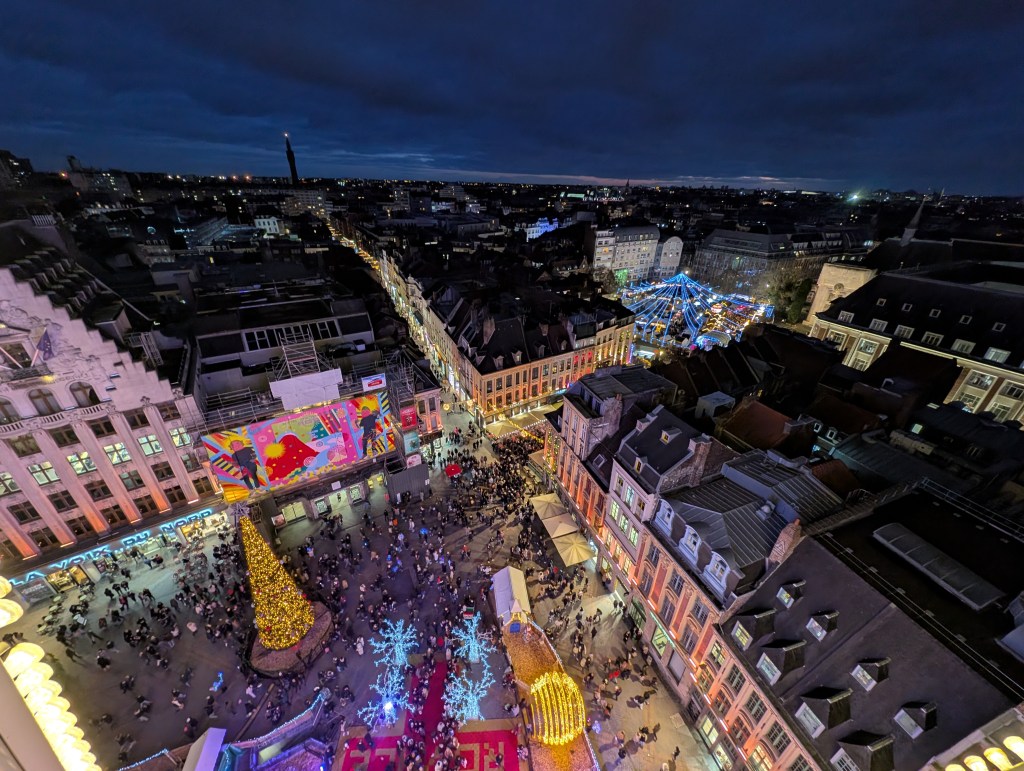
If you’re after a fun and festive way to soak up some Christmas spirit, Lille is a brilliant little getaway—especially since it’s just a short hop from the UK. Right in the heart of the city at Place Rihour, there’s a Christmas market with rows of wooden chalets selling everything from handmade gifts to delicious seasonal treats. Just around the corner in Grand Place, there’s a huge Ferris wheel that gives you amazing views over the city (especially magical at night!).

Our Family Experience in Lille

We went just before Christmas 2024, and it was such a lovely pre-holiday escape. On top of Lille, we also squeezed in quick visits to Ghent and Ypres while we were in the area—both were absolutely worth it.

Lille’s Christmas market isn’t one of the massive ones, so it’s a bit more low-key—which we liked. That said, the market area itself does get pretty packed, as it’s tucked into a fairly small space. Honestly, we enjoyed just wandering around the rest of the city centre more—it’s beautifully lit and feels really festive without being shoulder-to-shoulder crowded. But I’ve got to say, the vin chaud at the market hit the spot, and the kids were all about the hot chocolate and churros. The Ferris wheel was a real highlight—such a fun way to see the city all lit up.

Getting There: We Drove via Le Shuttle

While Lille is easily accessible by Eurostar, we chose to drive from the UK using Le Shuttle through the Channel Tunnel. The journey was straightforward and gave us the flexibility to pack everything we needed for a winter break with kids.

Driving also meant we could explore at our own pace and enjoy the convenience of having our car with us in France. From Calais, Lille is just a 1 hour 15 minute drive, mostly on motorways, making it a great option for families who prefer road trips.

Other Ways to Reach Lille from the UK

If driving isn’t your style, the Eurostar from London St Pancras gets you to Lille in under 90 minutes. It’s a brilliant no-fuss option, dropping you right in the city centre. Alternatively, you could fly into Brussels or Paris and take a connecting train to Lille.

Where to stay: Family Friendly Tips

We booked a central apartment with parking, which was perfect for our needs. Being close to the market meant we could return for breaks, warm up, and prepare simple meals. This flexibility made the whole trip more relaxed, especially with the kids.

While we didn’t find many overtly child-focused restaurants, Lille has plenty of bakeries, crêperies, and brasseries where families are welcome and well-fed.

More Things to do in Lille at Christmas

Outside the market, Vieux Lille (Old Town) is beautiful to explore in winter—cobbled streets, Flemish-style buildings, boutique shops, and cosy cafés await. If you’ve got extra time, consider day trips to Ghent or Ypres, both of which are easy to reach by car or train.

Why is Lille perfect for Family Christmas Break

  • Great base for visiting Northern France and Belgium
  • Safe, walkable city centre ideal for children
  • Traditional market with food, gifts and fun rides
  • Cosy central accomodation with parking options
  • Drive via Le Shuttle or take the Eurostar from London

Full Moon Party – with kids!

Follow our travels on Instagram

Discover how to enjoy Thailand’s Full Moon Party with children. Tips on family-friendly accommodation, activities, and safety for an unforgettable experience.

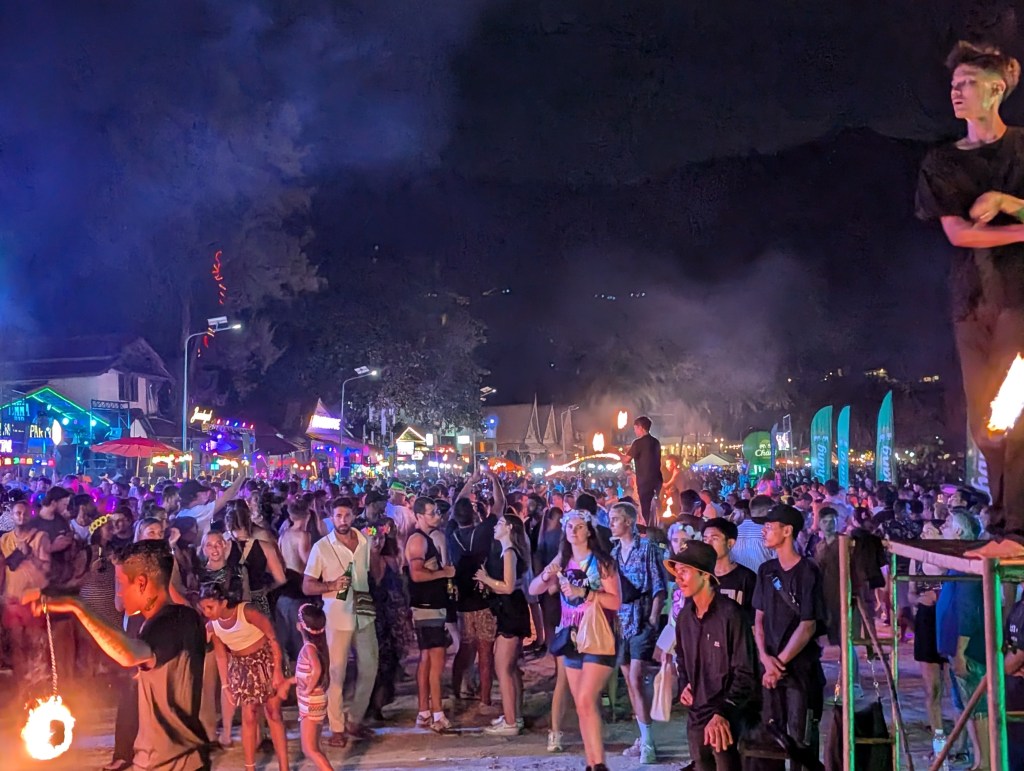
Okay, I know what you’re thinking — a Full Moon Party and kids? Not exactly a match made in heaven, right? Trust me, I had the same thought. I’d never made it to one in my younger, wilder days, but it always sat on my bucket list. Fast forward to now: I’ve got three kids, questionable stamina, and zero interest in partying until sunrise. So… maybe doing it with the kids was the dream scenario after all?

Of course, there are definitely a few things to keep in mind to make sure everyone has a great (and safe) time. So here’s the lowdown on how we went about it.

location, location, location

This was hands-down our biggest decision: where to stay. We weren’t after the wild backpacker scene, but we also didn’t want to be so far out that getting back meant a late-night transport mission. Too close, though, and we’d risk the Full Moon chaos spilling right onto our doorstep. Oh, and we didn’t want to blow the budget—but we were willing to pay a little extra to tick all the right boxes.

Let’s be real: we don’t always get it right when we travel, but this time? We nailed it. We ended up staying here—and honestly, it was the best decision we could’ve made (even if it was a bit of a lucky guess from our kitchen in Southampton weeks earlier!). The hotel is right on the Full Moon Party beach, but tucked away at the far end, so we had the perfect balance: just a five-minute stroll along the sand to the party, but far enough to escape the chaos when we needed a break.

They were also impressively prepared. We were given wristbands for re-entry, and there was a staff member stationed at the beach entrance to make sure only hotel guests could come through. It felt safe, organised, and just the right kind of buzz. They had a buffet dinner available on the night of the party, already included in the price, and everyone got a drink. I really can’t recommend it enough if you are looking for the same type of thing.

Go early

This was actually a really important tip for us, and one I’d definitely pass along to others. We knew we wanted to soak up the atmosphere and enjoy the energy of the night, but at the same time, we were mindful of not exposing the kids to anything too wild—like people who were completely out of it from drinking or drugs. So we planned it carefully: had dinner around 7, then headed to the party between 8 and 9. We stayed until about 11 or midnight. Just as we were leaving, there was a noticeable surge in the crowd—it was already packed, but it was starting to get even more intense. I think we got the timing just right. That said, Megan was definitely hoping to stay a bit longer!

Get T shirts and face paints

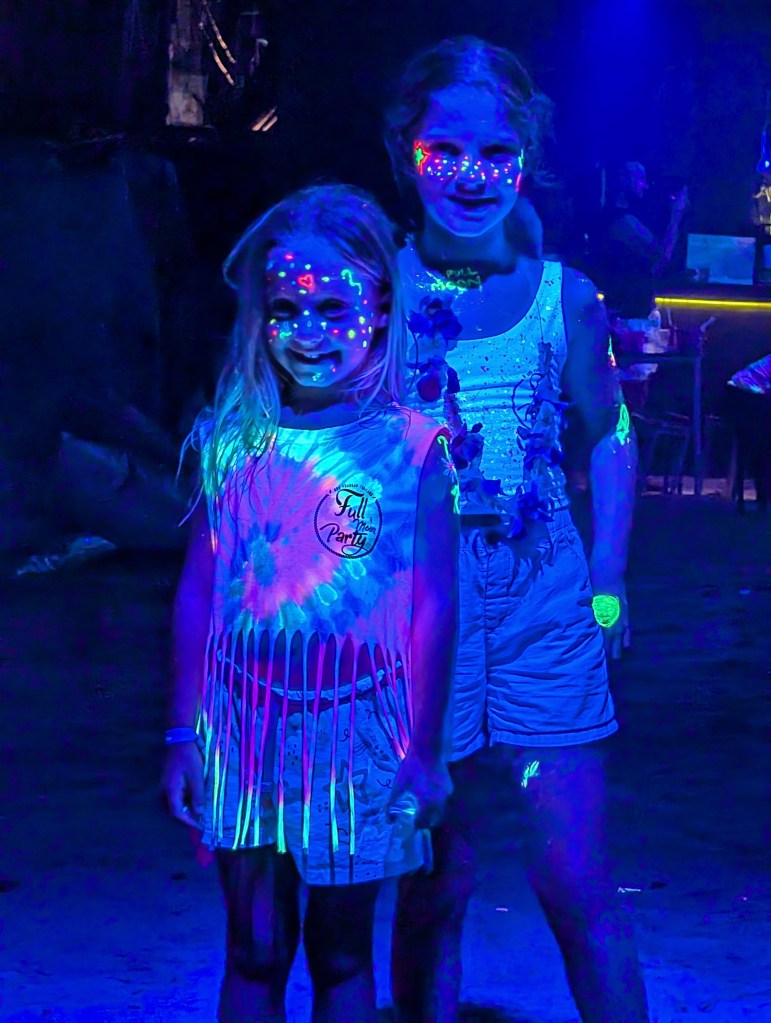
This was one of the most fun and memorable moments of the evening, especially for the kids who fully embraced the experience. We went to the streets just behind the beach, soaked up the pre party vibe and bought Full Moon Party T-shirts for us all. There were also loads of vibrant stalls offering fluorescent face paint—perfect for getting into the spirit of things and fun for the kids. Conveniently, those same stalls also sold the iconic buckets!

Accept that it will be loud

The place we stayed at was great, but it wasn’t completely quiet when we got back to the hotel. As you’re close to the party, you can still hear it. It’s lively—it’s a party atmosphere. While there was no drama or trouble, light sleepers might find it a bit hard to get a good night’s rest.

If you’re on the fence about doing this and wondering whether it’s a good idea, I can confidently say it absolutely is—especially if you plan it right. Our kids had an amazing time, and so did every other child we saw. They felt completely safe, totally happy, and came away with only the best memories of one of the world’s most iconic celebrations. Parenting win? I like to think so. I’m definitely counting on this to earn me some cool mum points down the line!

Two months independent family travel in Indonesia

Family travel in Indonesia: a complete 2-month guide covering visa on arrival, visa extension tips, using Gojek, travelling with kids, safety advice, Mount Bromo sunrise, Bali, Sumatra, and more.

Follow our travels on Instagram

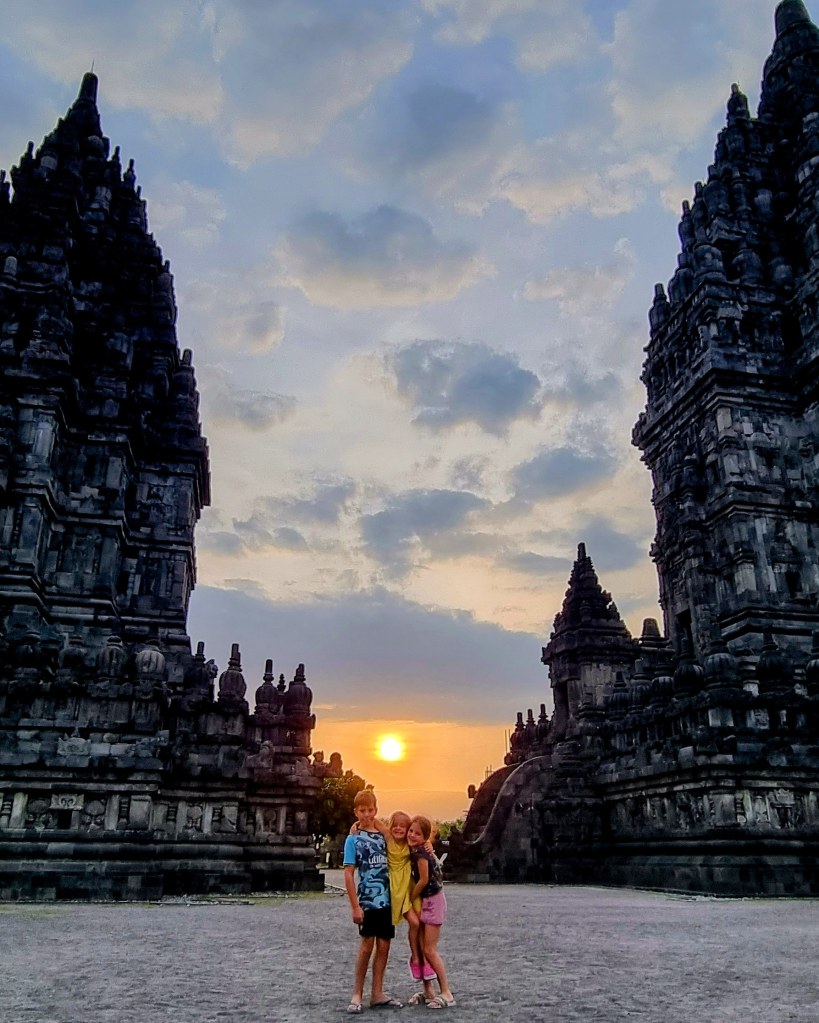
Indonesia is a never-ending adventure. With over 17,000 islands, this Southeast Asian gem offers everything from the buzzing streets of Jakarta to the peaceful rice fields of Ubud, the dense jungles of Sumatra, and the stunning coral reefs of northern Bali and the Gili Islands. We still talk about watching the sunrise over Mount Bromo; it sounds cheesy but it really was surreal. Another unforgettable moment was the sunset behind the ancient spires of Prambanan Temple—genuinely magical. Whether you’re snorkelling in the crystal clear waters of northern Bali, swimming with giant manta rays, peering into roaring volcanoes, or spotting wild Komodo dragons, travelling through Indonesia is full of surprises. It’s home to over 270 million people, and its cultural and geographical diversity is unlike anywhere else in the world.

Mount Bromo at sunrise

We spent two full months in Indonesia as a family in 2022, gaining hands-on experience and practical travel insights. From visa extensions and transport tips to exploring off-the-beaten-path regions, here’s everything we wish we’d known before we went. Also read our highlights for ideas about where to go.

Is Travelling in Indonesia with Children Safe?

Short answer: Yes, Indonesia is safe for families with children. At no point during our trip did we feel unsafe. The Indonesian people were incredibly warm and welcoming—especially to our children.

Of course, common-sense safety rules still apply: be cautious around traffic, take care with street food, and remember that health and safety standards may not match European norms. In more conservative areas, such as parts of Sumatra, respecting local customs is especially important. But overall, Indonesia felt safe, friendly, and family-friendly.

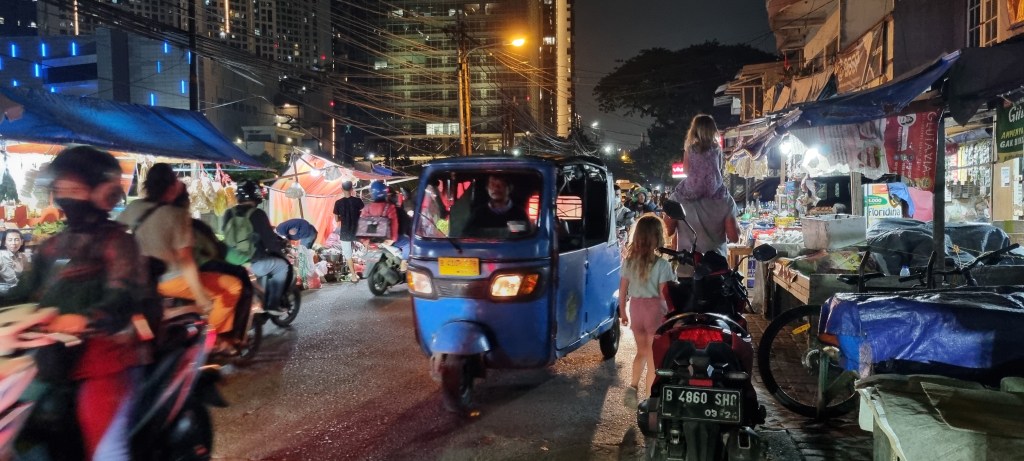
The busy (but brilliant) streets of Jakarta

Accept you can’t see it all

Two months might seem like plenty of time to travel, but in a country as massive and wildly diverse as Indonesia, it barely scratches the surface. We’re talking over 17,000 islands—each with its own vibe, landscapes, food, and culture. Getting around isn’t always quick either; think long ferry rides, bumpy bus journeys, and the occasional island-hopping flight. From the dramatic volcanoes of Java to Sumatra’s dense jungles, the spiritual buzz of Bali, and the hidden paradise of Karimunjawa, you’ll find yourself constantly choosing between amazing places—and realising there’s just no way to see it all. But honestly? That’s part of the magic. Indonesia doesn’t just offer a trip; it teases you with a glimpse and makes you want to come back. And don’t worry—whatever you do manage to fit in will absolutely blow you away.

Beach in Karimunjawa

Visa on Arrival in Indonesia and How to Extend It

If you’re planning a longer trip to Indonesia, you’ll need to understand the Visa on Arrival (VOA) process. We entered the country via Jakarta Airport, where we paid the visa fee in cash—note that we could only pay in cash, but there are plenty of ATMs in the arrivals hall.

The VOA is valid for 30 days, and if you’re staying longer (like we did), you’ll need to extend your Indonesian visa. While in Bali, we explored our options and ended up using a visa extension agency. Although it cost a bit more than doing it ourselves, it saved so much time and hassle. The agency took care of the paperwork and immigration visits, allowing us to explore the rest of the island stress-free.

You’ll need to hand over your passport temporarily (they’ll give you a photocopy and cover letter, which hotels accept), and collect it a few days later—super convenient, especially if you’re travelling onward to places like Lombok.


Download the Gojek App: Your Best Travel Companion in Indonesia

If you’re visiting cities like Jakarta, Yogyakarta, or Denpasar, don’t leave without downloading Gojek—Indonesia’s answer to Uber, but with more features. It made getting around Indonesia much easier, especially in areas where public transport was limited or confusing.

From ordering food to booking a last-minute ride, Gojek in Indonesia is a total lifesaver for families and solo travellers alike. It’s safe, reliable, and available in most major tourist areas.


Get a SIM Card at the Airport

One of our top Indonesia travel tips: buy your SIM card at the airport. We tried finding one in town later on and it was far more difficult than expected. Having mobile data from day one made navigation, bookings, and communication so much easier—especially when using apps like Gojek or Google Maps.

Surfer at Seminyak Beach in Bali

Understanding Cultural Norms in Indonesia

While Indonesia is known for its tourism hotspots like Bali and Yogyakarta, we also visited Aceh in northern Sumatra, where Sharia law is in effect. Although this didn’t directly impact us as tourists, it’s essential to be aware of local expectations.

In places like Aceh:

  • Dress modestly (shoulders and knees covered)
  • Avoid public displays of affection
  • Unmarried couples may be asked not to share accommodation
  • Alcohol is banned, so don’t bring or ask for it

We also found limited access to international ATMs in Banda Aceh and Pulau Weh, so carry enough cash when heading to more remote or conservative regions.

If you decide to experience these lesser visited parts of Indonesia, you will stand out and attract attention. It’s not always comfortable but we never felt it a threat. We generally decided to go with it and politely decline photos of the kids if we felt uncomfortable. We did feel like celebrities at times! Just be aware that it happens and while you really don’t need to feel nervous, it’s worth deciding how to deal with it.

Visiting a mosque in Medan, Sumatra

Final Thoughts: Why Indonesia Is Worth Exploring for Longer

From the temples of Java to the turquoise waters of the Gili Islands, and the welcoming people across every region, Indonesia rewards slow, mindful travel. The diversity of landscapes, cultures, and experiences is unmatched—and two months still didn’t feel like anywhere near enough. I feel like you could spend a lifetime travelling Indonesia.

If you’re considering long-term travel in Indonesia, especially with a family, we wholeheartedly recommend it. With the right planning, the country offers a perfect blend of adventure, culture, and connection.