Family Camping in Europe: Corsica, Italy and Slovenia With Kids 8-13

Follow our travels on Instagram

Our Month-Long Family Camping Trip

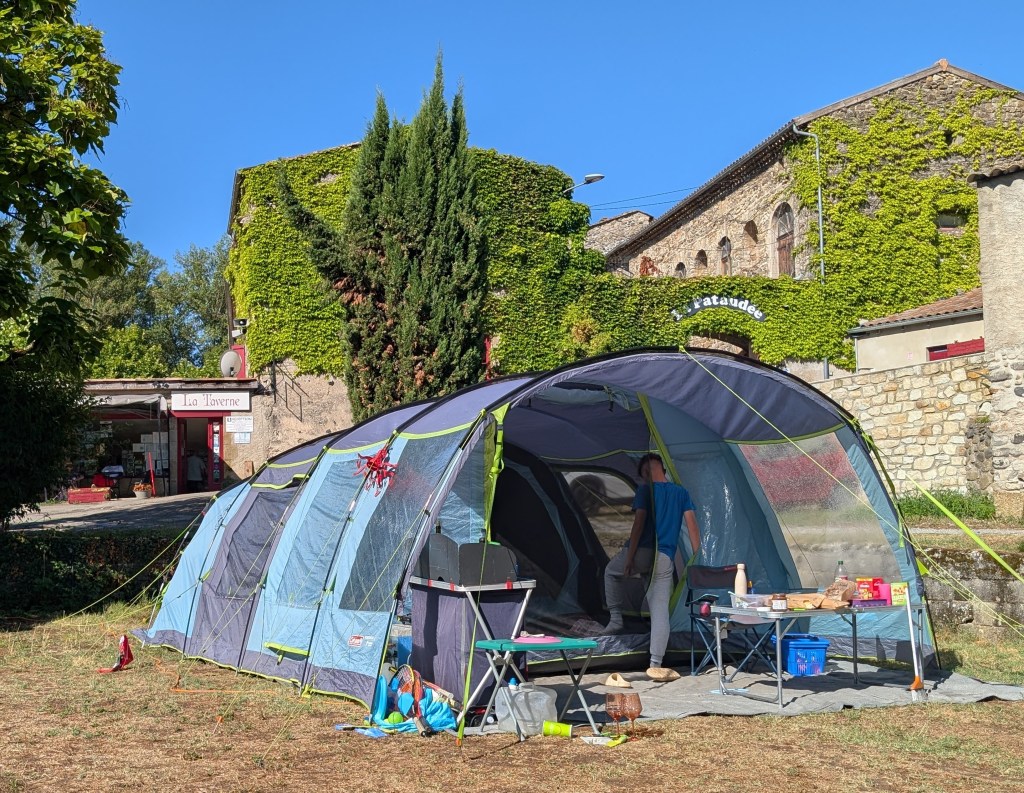
This summer, we spent a whole month camping across Europe with our three kids (aged 8, 11, and 13). While camping isn’t exactly new to us, most of the places we visited were completely first-timers for the family. From wandering Corsican towns and soaking up sun on stunning beaches, to hiking in alpine mountains and relaxing by crystal-clear lakes, we covered a huge variety of Europe — and had an absolutely brilliant adventure along the way.

We started in the Ardèche, taking a few days to slow down and recharge after the mad end-of-term rush. Then it was off to Corsica, where rocky cliffs, turquoise waters, and hidden beaches kept us exploring — though not without a few navigational hiccups (dodgy roads and flip-flop hikes included!). From there, we drove through Tuscany’s rolling hills, tackled family-friendly trails in the Dolomites, and finished our trip at the stunning Lake Bled in Slovenia.

Along the way, we learned a lot about travelling with our older kids: how to balance adventure with downtime, where to find the best gelato, and how to keep everyone (mostly) happy in a tent for a whole month. In this post, I’ll share our route, favourite stops, and some tips for making family camping in Europe both fun and manageable.

France – Ardèche & Corsica

Decompressing in Ardèche (3 nights)

After a hectic end-of-term, we spent a few days in the Ardèche just chilling at the campsite. Normally I feel the need to be busy, but slowing down was actually lovely — reading, swimming, and letting the kids play. When the kids were little, the play always involved us, so it wasn’t downtime at all. It was much easier to be out and about. Now, although I don’t naturally relax, the kids enjoy the downtime and the relaxation, and they can play on the trampoline without me!

Exploring Bonifacio, Aiguilles de Bavella and beaches (5 nights)

We have wanted to go to Corsica for years and I’m so pleased we took the plunge this year. We took the overnight ferry from Toulon to Ajaccio and it honestly couldn’t have been better. We booked using direct ferries and it worked so well. We’re a family of 5 but booked a 4 person cabin, outside, ensuite cabin which worked out fine for all of us. We arrived in Ajaccio at 7am, parked in a central car park, enjoyed a morning dip and wander, picked up some breakfast treats, then headed to our campsite near Bonifacio in the very south of Corsica.
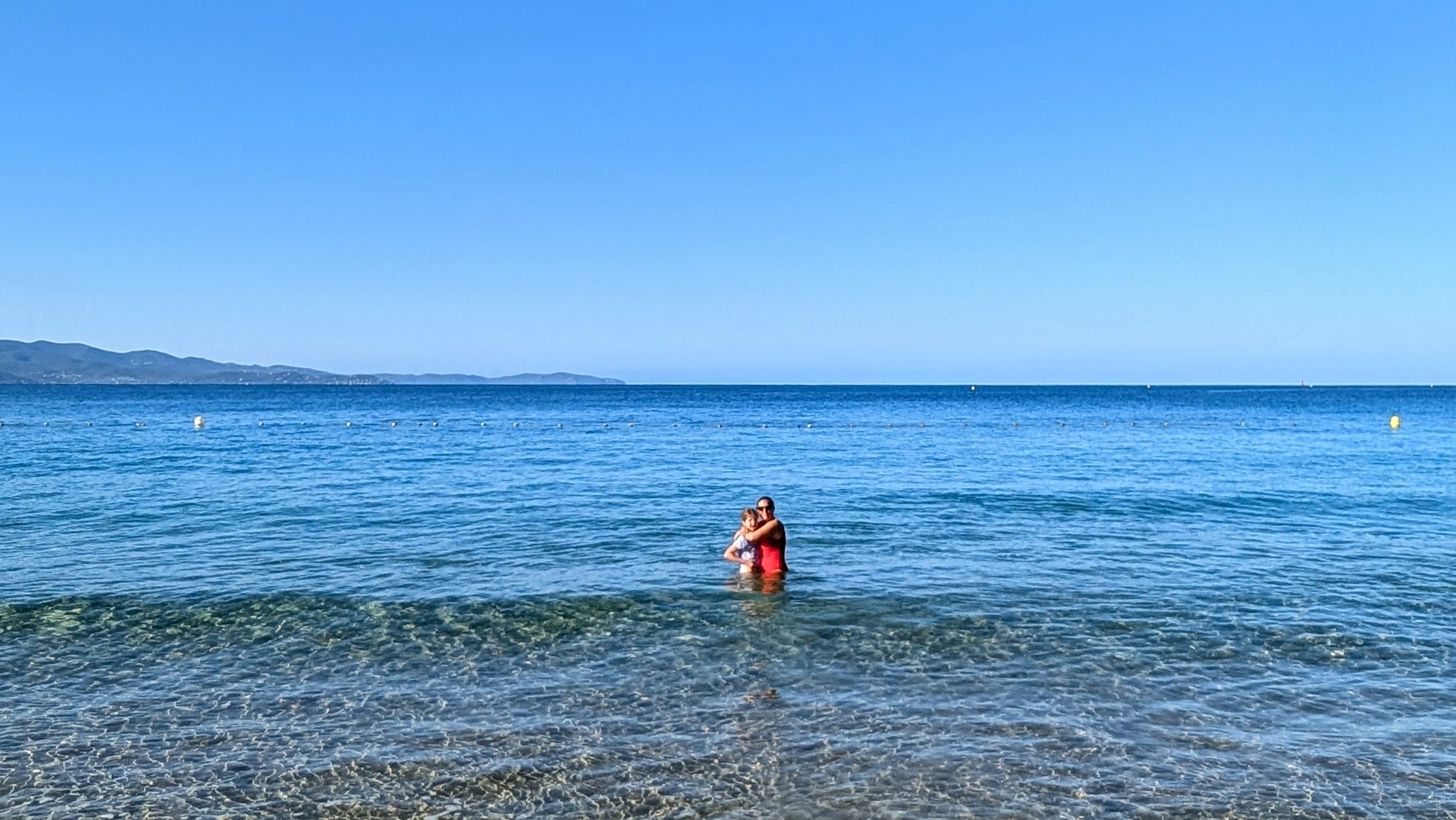
swimming in the sea in Ajaccio

On the way, we stopped at Roccapina Beach — the road is dodgy, but the beach is lovely (although, not lovely enough to risk your car, in my view!).

Rocapina Beach
  • Activities: Exploring Bonifacio’s cliffs and old town, short hikes, and cliff-side views.
Bonifacio
  • Note: The Lavezzi Islands were too choppy for a boat trip, so we admired them from the cliffs, which was still pretty good.

Aiguilles de Bavella Hike with Kids

One day we headed up to the Aiguilles de Bavella, and wow — the drive alone was worth it, with beautiful views around every bend. I honestly wasn’t expecting to do much walking — I’d imagined it was all proper, hardcore hiking, and let’s be honest, we’re definitely not hardcore hikers. But we managed to find a 2.5-mile-ish trail straight from the car park that was perfect for the kids: easy, beautiful, and completely doable.

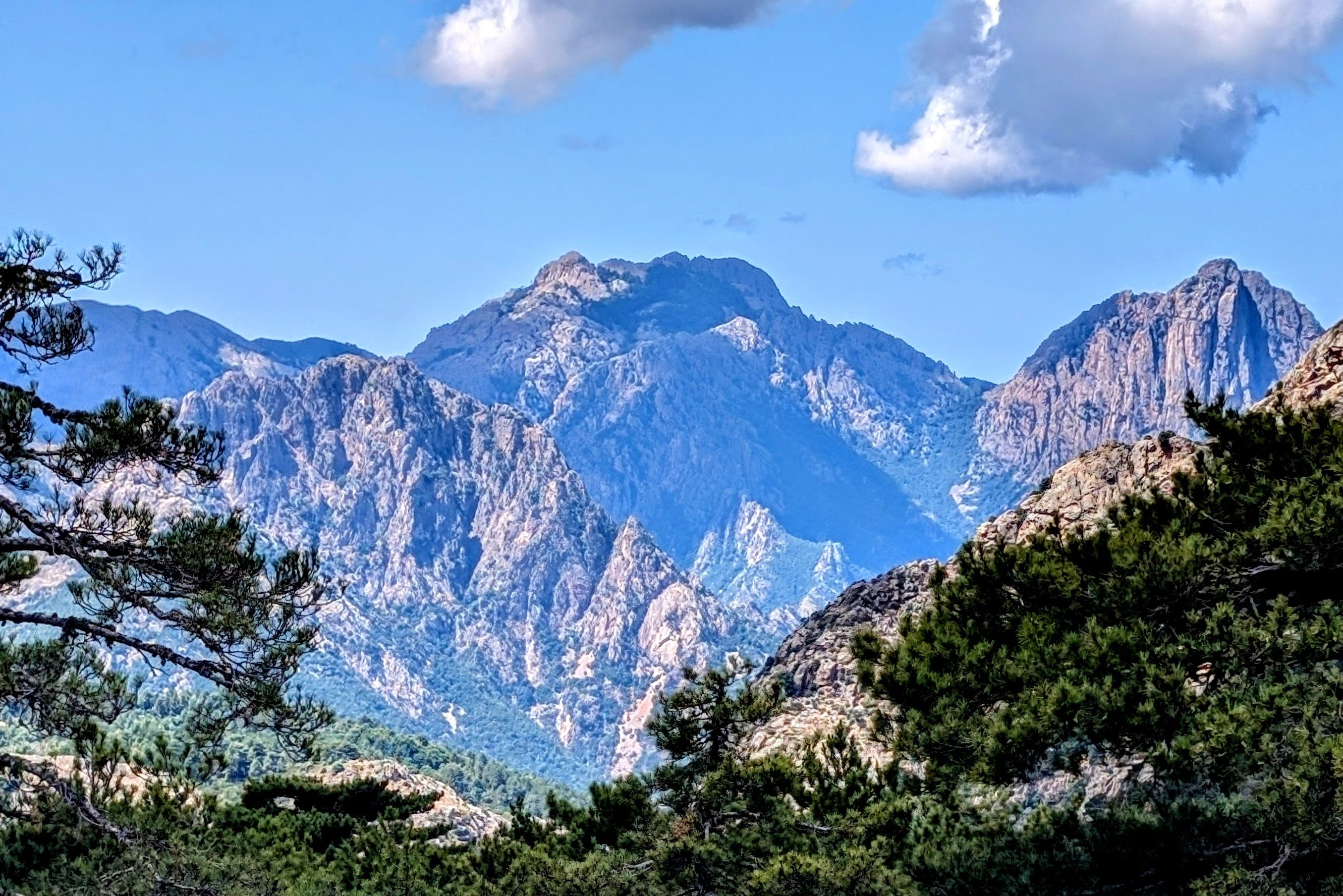
Family hike with kids at Aiguilles de Bavella in Corsica

Pro tip: don’t forget proper shoes! We could have easily gone further if we’d had the right footwear, but of course, we were the family doing it in flip-flops.

Beach Days at Pinarello & Rondinara

These beaches were perfect for relaxing: swimming, sunbathing, and enjoying the scenery without any rush, although they do get very busy so be prepared for lots of people. The sea is beautiful though and the kids loved snorkelling in the crystal-clear water. We took picnics to keep costs down and they were really relaxing days chilling out and playing at the beach.
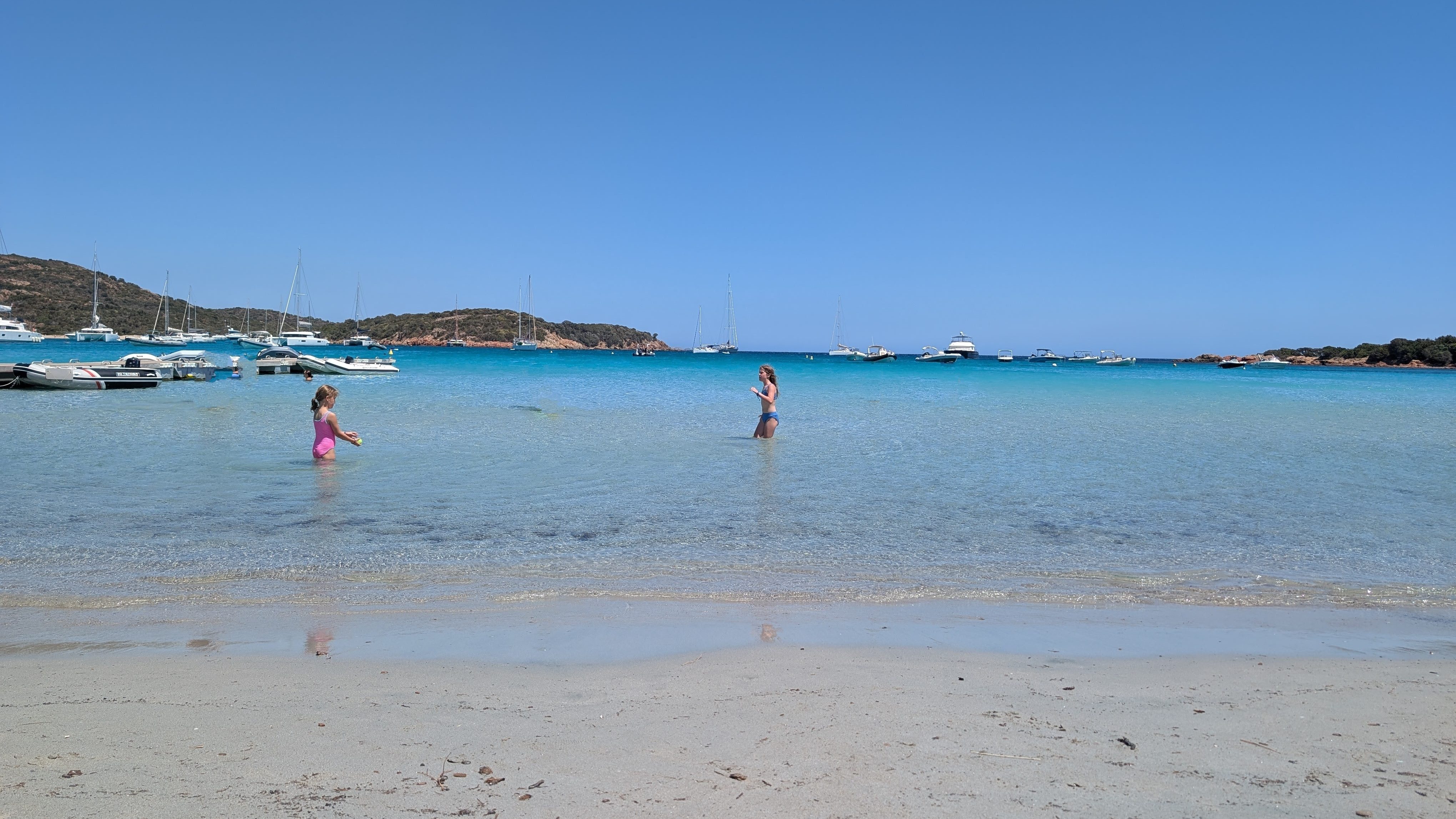
Rondinara beach

We stayed at Camping Di Liccia, and it was a really good spot — there was a pool, evening entertainment, and plenty of space on the pitches. It wasn’t quite as peaceful as the quiet campsites we usually go for, but we’d definitely recommend it and would happily stay again. The kids loved the daily sports tournaments and, despite the language barrier, got fully involved.
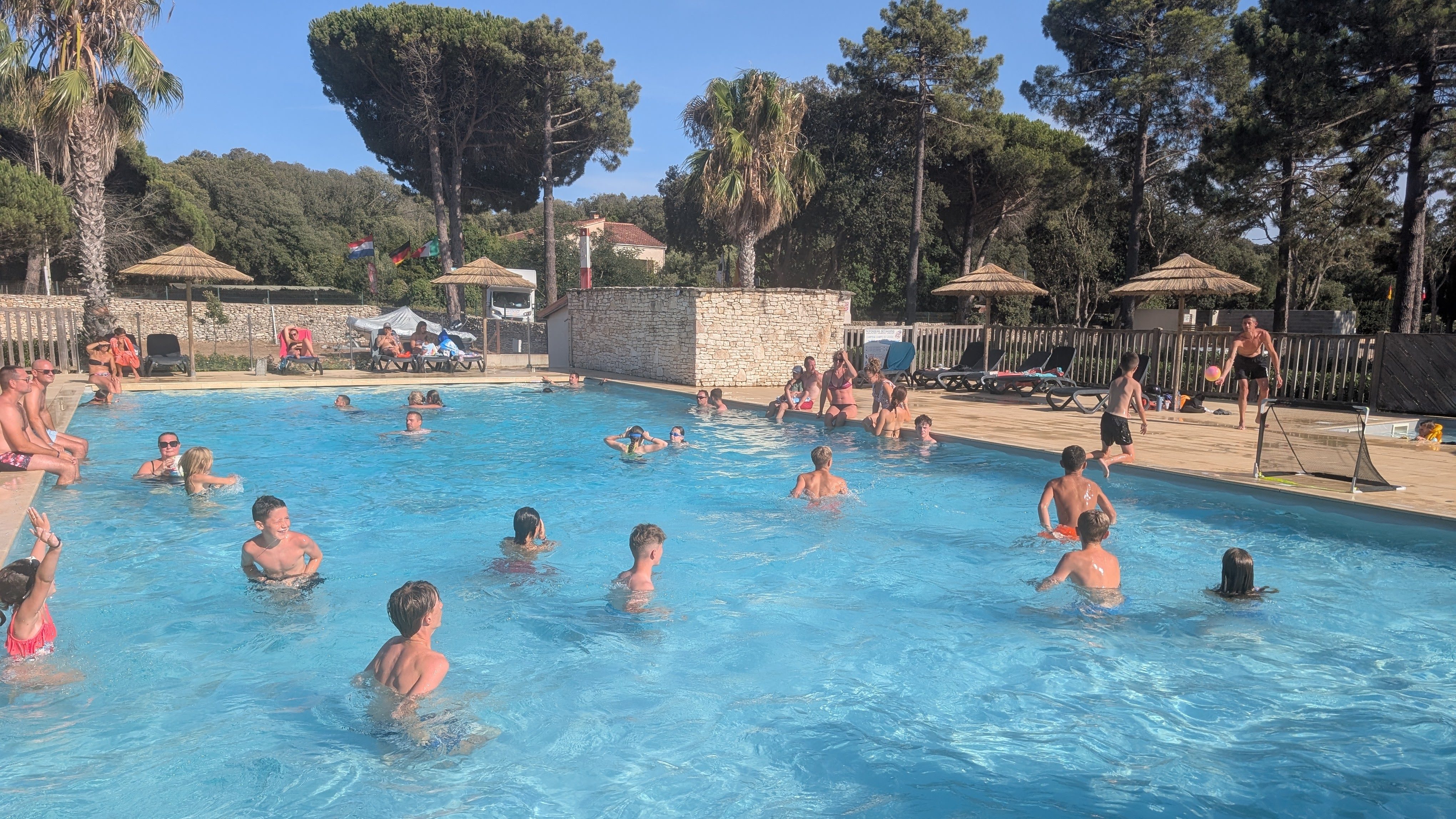
Kids playing water polo at the campsite

Sagone (4 nights)

When we were booking campsites we weren’t sure about this area but actually it was really beautiful and we’d definitely recommend to anyone coming to Corsica. the campsite itself was, again, more of a resort type campsite than ones we usually stay at but it had great pitches, clean facilities, a couple of pools, a park and pretty lively evening entertainment! The girls definitely enjoyed the foam party.

Evening entertainment at Camping Le Sagone

We did a road trip around the Calanques de Piana which was stunning; genuinely jaw dropping scenery everywhere and really didn’t take too long, avoiding the usual “are we there yet?”. We just followed Google maps and it was fine!

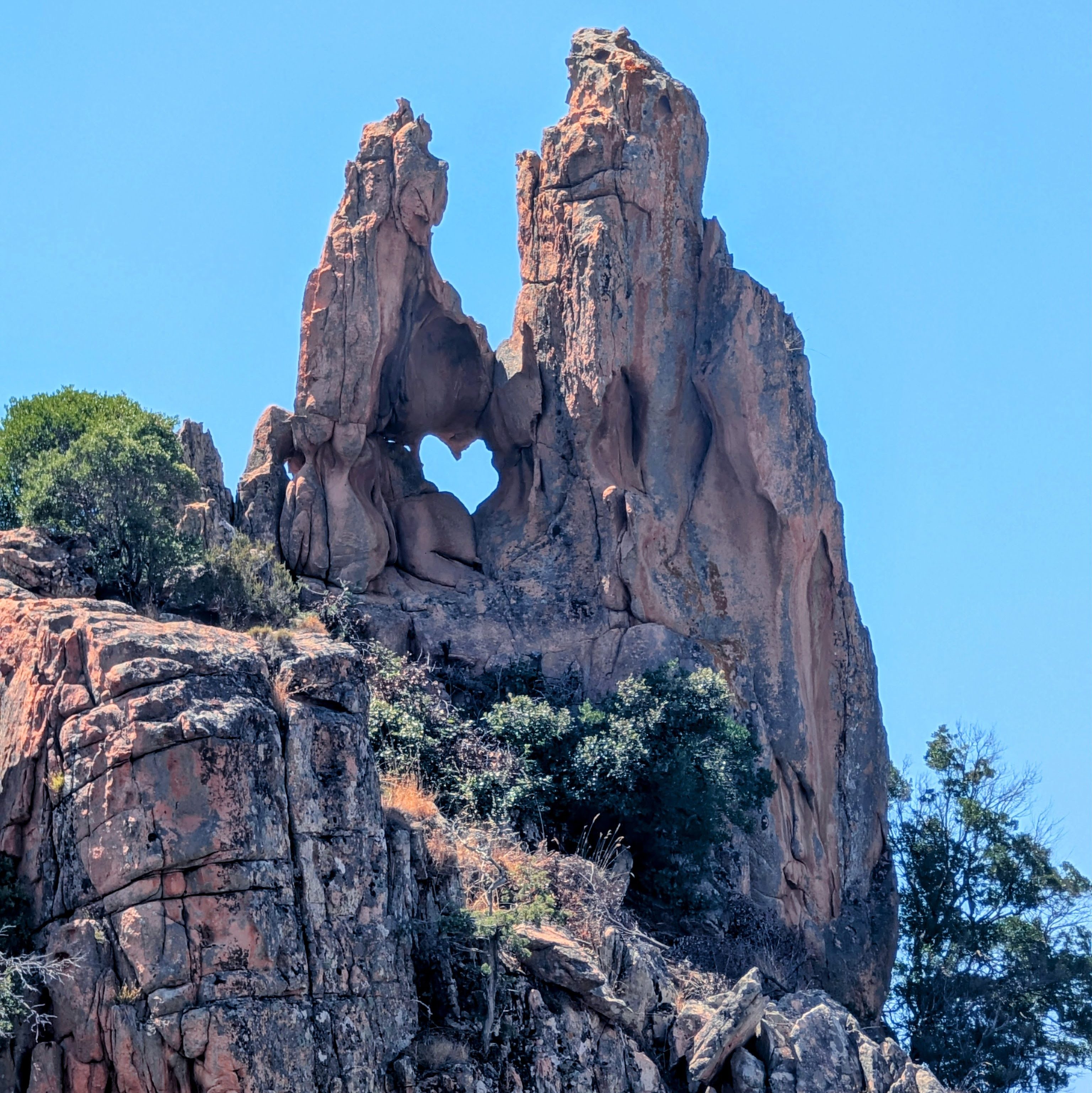
Evisa
Our road trip around Les Calanques de Piana

One day we just took it easy at the campsite, and on our last day we headed down to the beach for a final dip. We stayed at Camping Le Sagone, which we’d definitely recommend. The area — and the nearby beaches — felt much quieter and more relaxed than the busier south of Corsica, which made it a really lovely change of pace.

Bastia (4 nights)

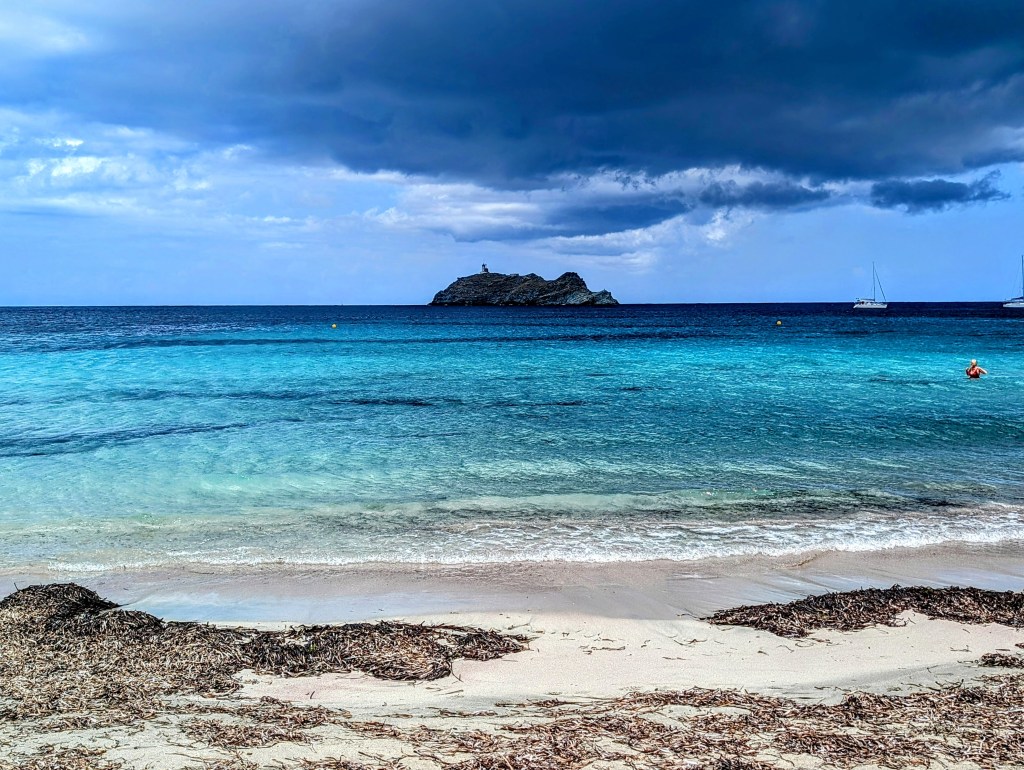
Our last stop in Corsica, before catching the ferry to Italy, was just outside Bastia in the north. We’d picked a campsite right on the beach, which was such a treat. True to form, we spent most of our time exploring the area rather than just lazing on the sand (much to the kids’ disappointment!), but we did make sure to have one proper beach day before we left. The campsite itself (Camping San Damiano) was fine — probably my least favourite of the three we tried in Corsica — but the beach more than made up for it. Honestly, we’d go back just for that.

Chilling out in the sea at our Bastia Campsite beach

We spent one day wandering through the local area and another soaking up the sun on the beach, but the real highlight was our road trip around Cap Corse. The drive itself takes about three hours and loops you around the dramatic coastline of Corsica’s “finger.” At first, I wasn’t sure about it—it felt a little too busy—but before long the crowds thinned, and the roads opened up to reveal breathtaking scenery. Along the way, there are plenty of little spots to pull over for a swim, grab an ice cream, or simply pause and take in the view. If you’re ever in this part of the island, it’s an experience I’d wholeheartedly recommend.
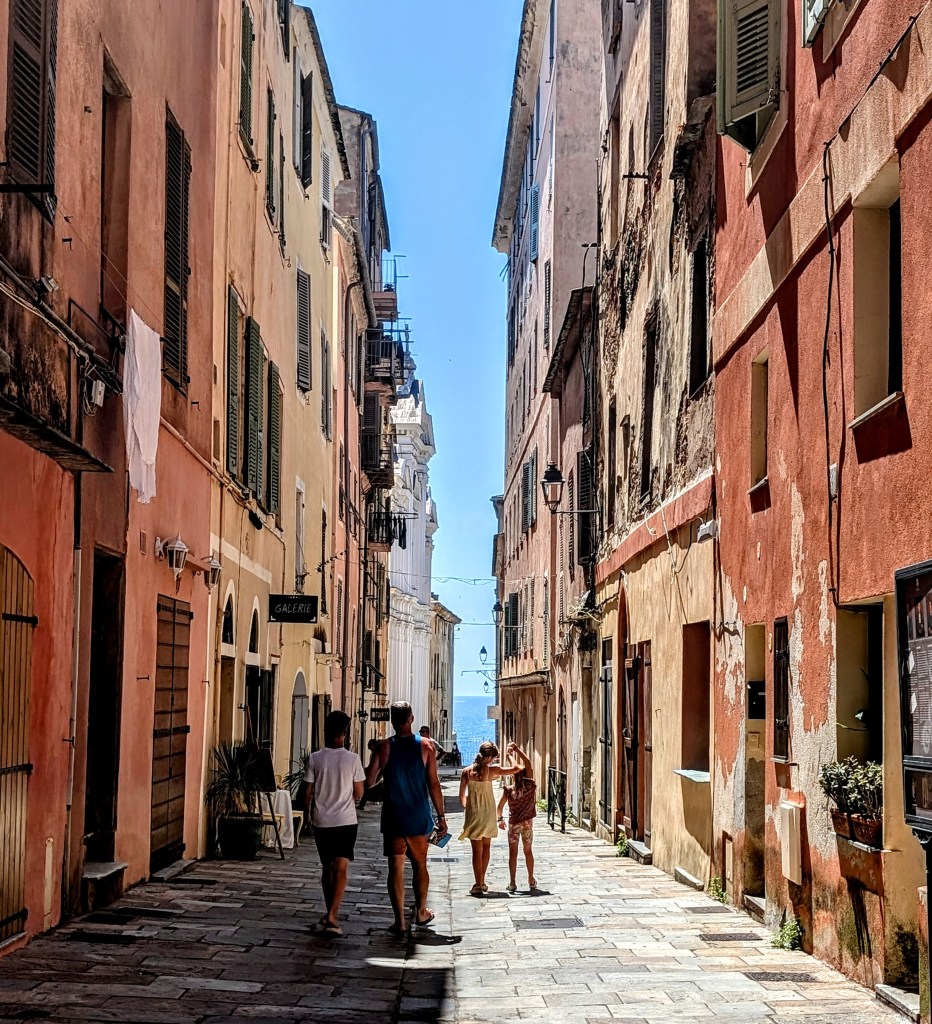
wandering the beautiful streets of Bastia
Taking a dip at Barcaggio beach, the northern most tip of Corsica
waves at Nonza beach
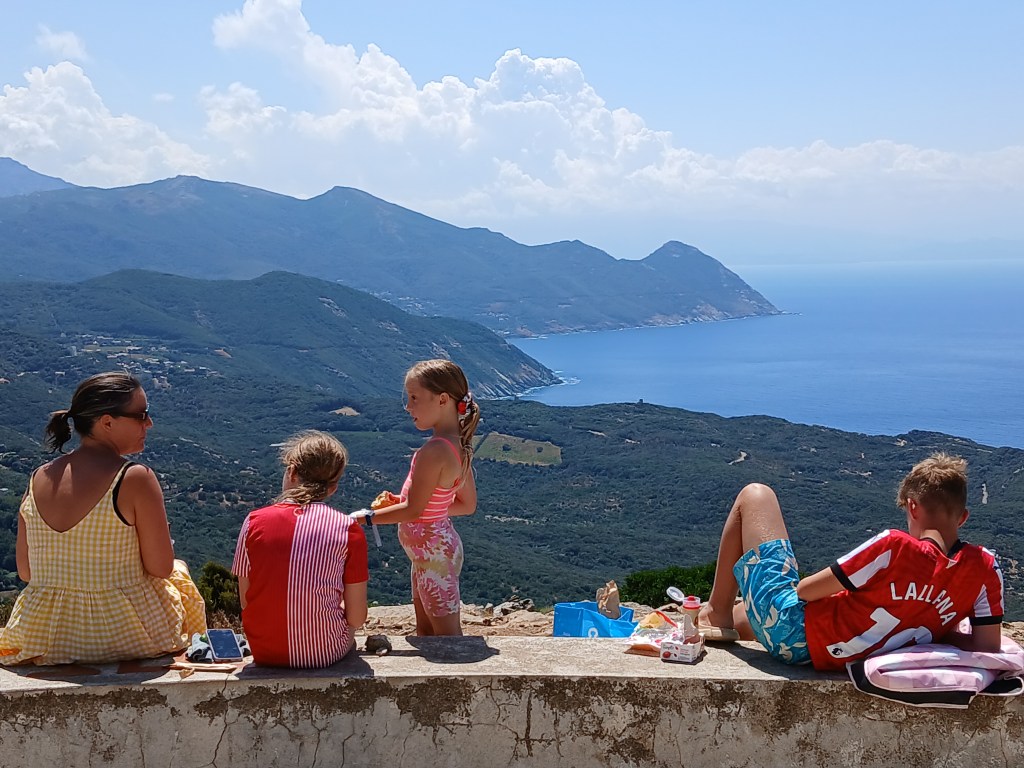
Lunch stop with a view

Travel tip – If you want to camp in Corsica and you want to book in advance then do so early. Our campsites were generally good but we were very limited in choice.


Italy – Tuscany & the Dolomites

Tuscan Countryside & Family-Friendly Campsites (3 nights)

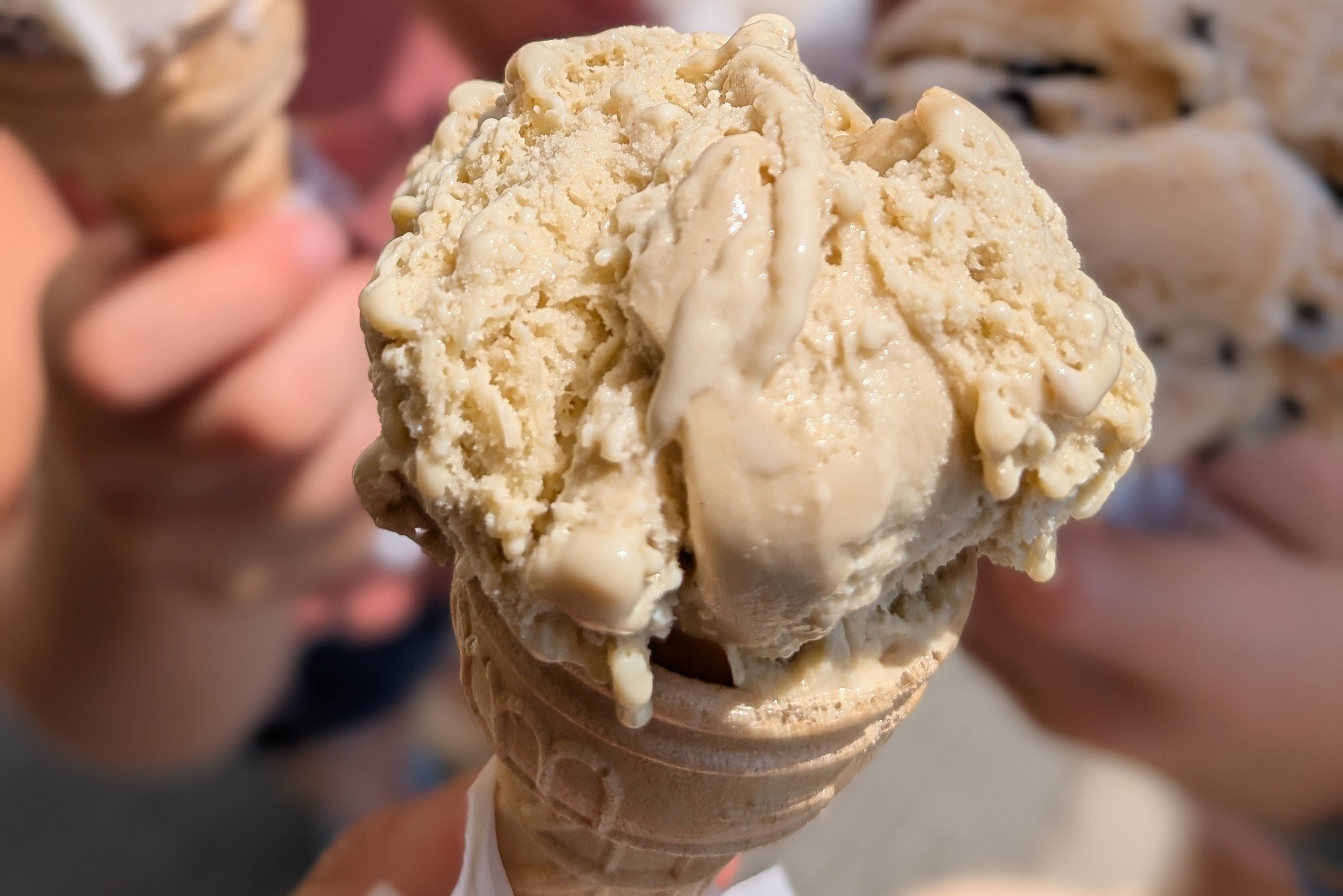
Tuscany’s rolling hills gave us the most beautiful drives, dotted with charming little towns and a campsite complete with a pool (remember your swimming hat!), pizza restaurant and lovely Aperol. We camped just outside Florence, but in the end decided not to head into the city itself as we’d been in with the kids before during our epic italian road trip. The kids weren’t too keen on wandering around in the heat—and honestly, we weren’t too keen on dragging them—so we went in search of somewhere with a view, pizza, and ice cream instead. Fiesole turned out to be perfect. From there, we had an incredible panoramic view of Florence, plus we stumbled on some truly delicious (and wonderfully affordable!) pizza and gelato. Let’s just say I may or may not have developed a little pistachio ice cream habit…
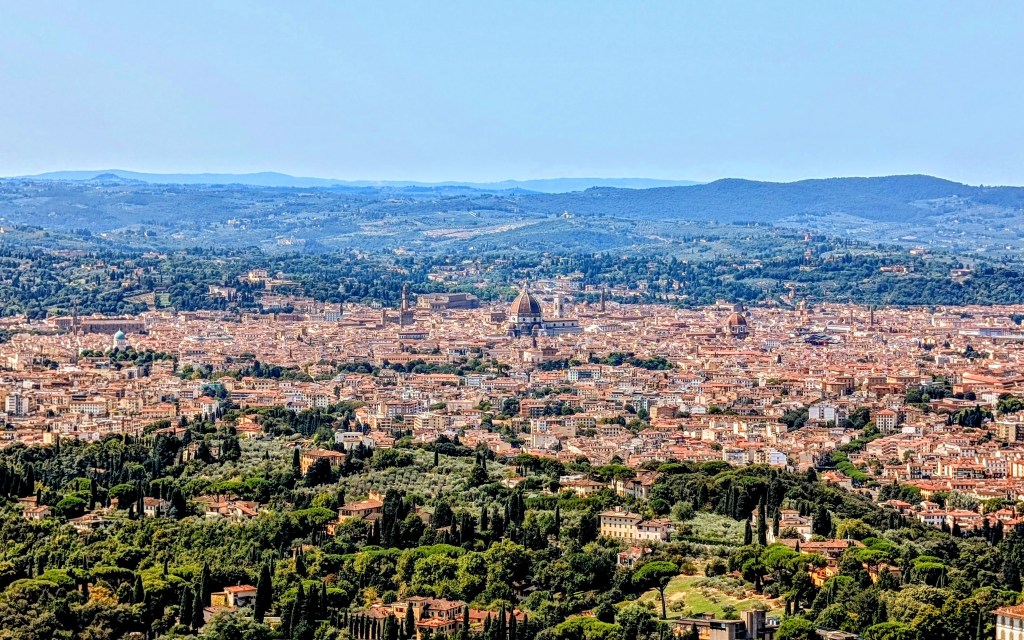
View of Florence from Fiesole
Pistachio gelato

Dolomites: Easy Trails and Scenic Adventures (4 nights)

The Dolomites absolutely took my breath away—and honestly, I wasn’t expecting them to. We were just trying to find a place to stay between Florence and Lake Bled (our final stop), and while scrolling through pitchup.com I started looking at campsites in the Dolomites. By the time we booked, options were slim, so I went with one that had no pool and no electric hookup—mainly because there wasn’t much else left! But wow… what a surprise it turned out to be. The campsite, Camping Marmolada Malga Ciapela, was tucked right at the foot of the Marmolada, with the cable car practically on the doorstep whisking you straight up the mountain. I hadn’t read much about the area and had no real expectations, but it turned out to be one of the most breathtaking places I’ve ever been.

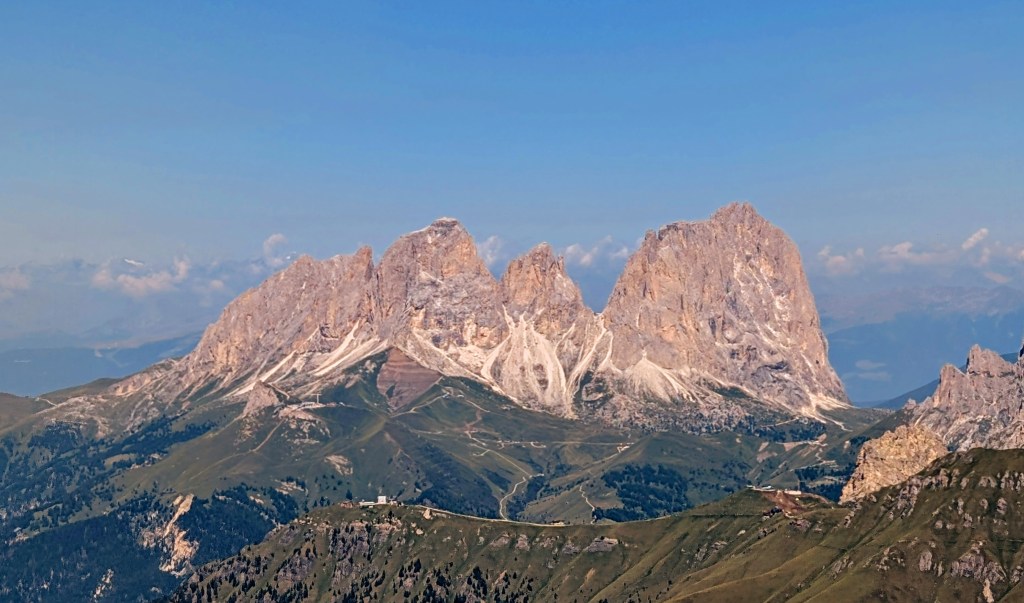
Camping Marmolada Malga Ciapela
View from the top of the cable car
More views!

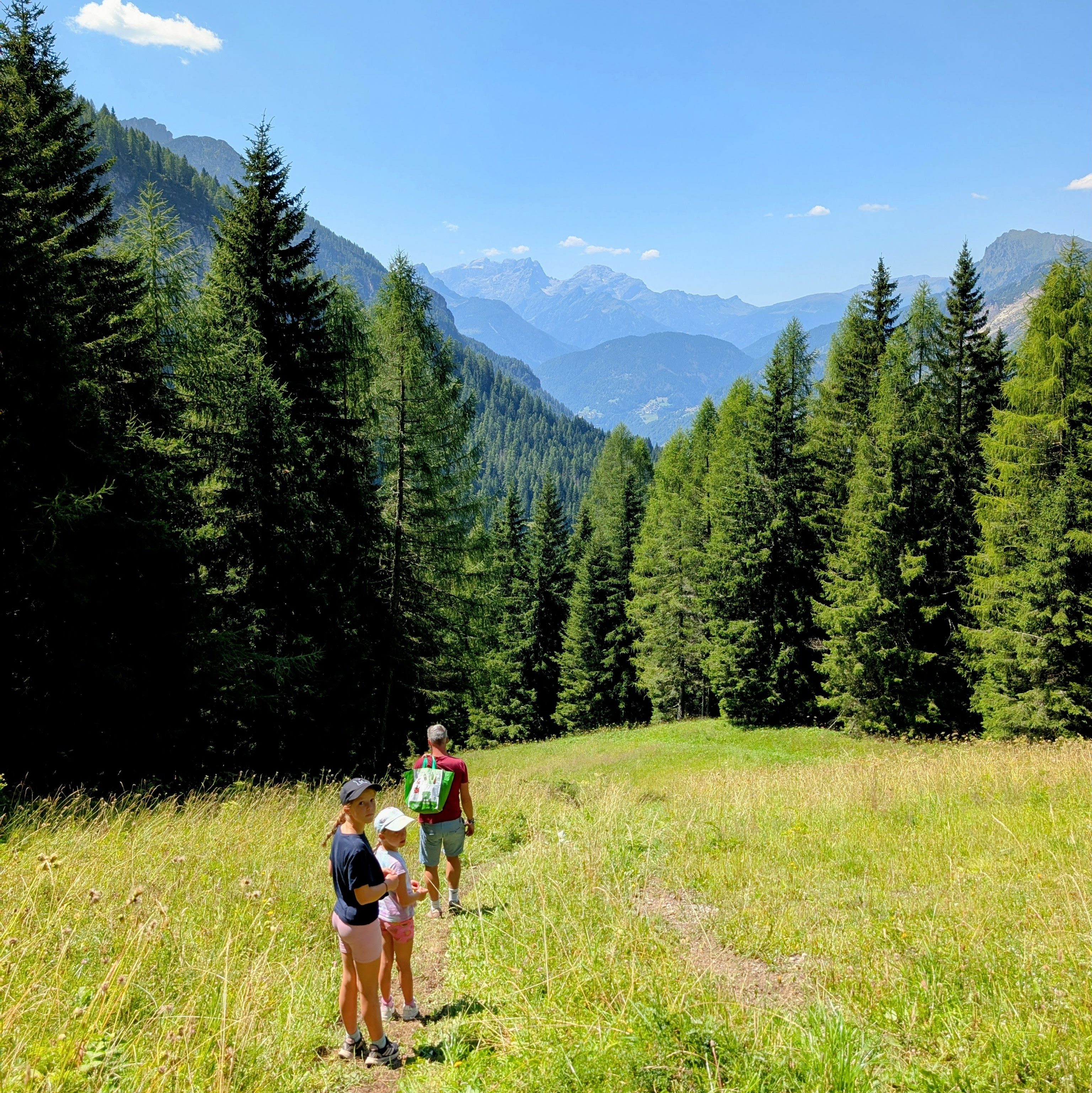
I used all trails to find some kid friendly walks nearby and whilst there weren’t loads suitable for a non-hardcore-hiking enthusiast family, there were one or two that I felt we could tackle. We did a 10km walk which was out to Malga Ombretta and back. It was quite steep at times on the way there (but all downhill on the return) but my non walking enthusiast kids managed it (and maybe enjoyed it a little…).

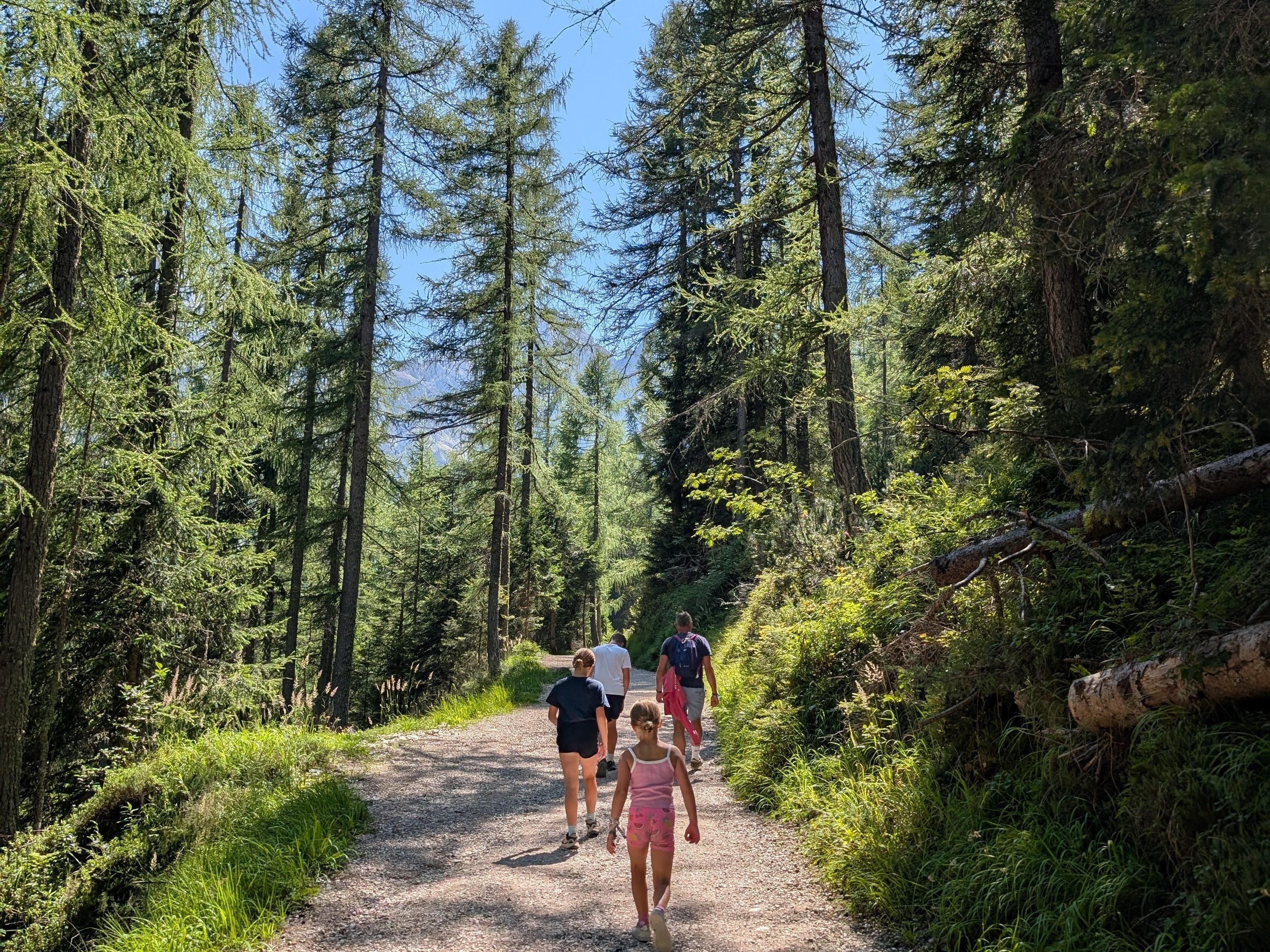
Views from our walk

We do love a good cable car ride, so of course we went in search of another one—and this time we found ourselves in the beautiful little town of Alleghe. The parking right by the cable car is very easy and cheap! From there, we hopped on the cable car up to Col di Baldi, which offered the most stunning views over the mountains. Instead of heading straight back down, we decided to make the walk back to Alleghe on foot. About halfway down, we stopped at Piani di Pezze for a bite to eat, and it was the perfect little pause. The kids loved the Civetta Adventure Park—ropes, swings, and plenty of climbing to burn off their energy while we enjoyed the fresh air as well as some delicious pizza and tiramisu.
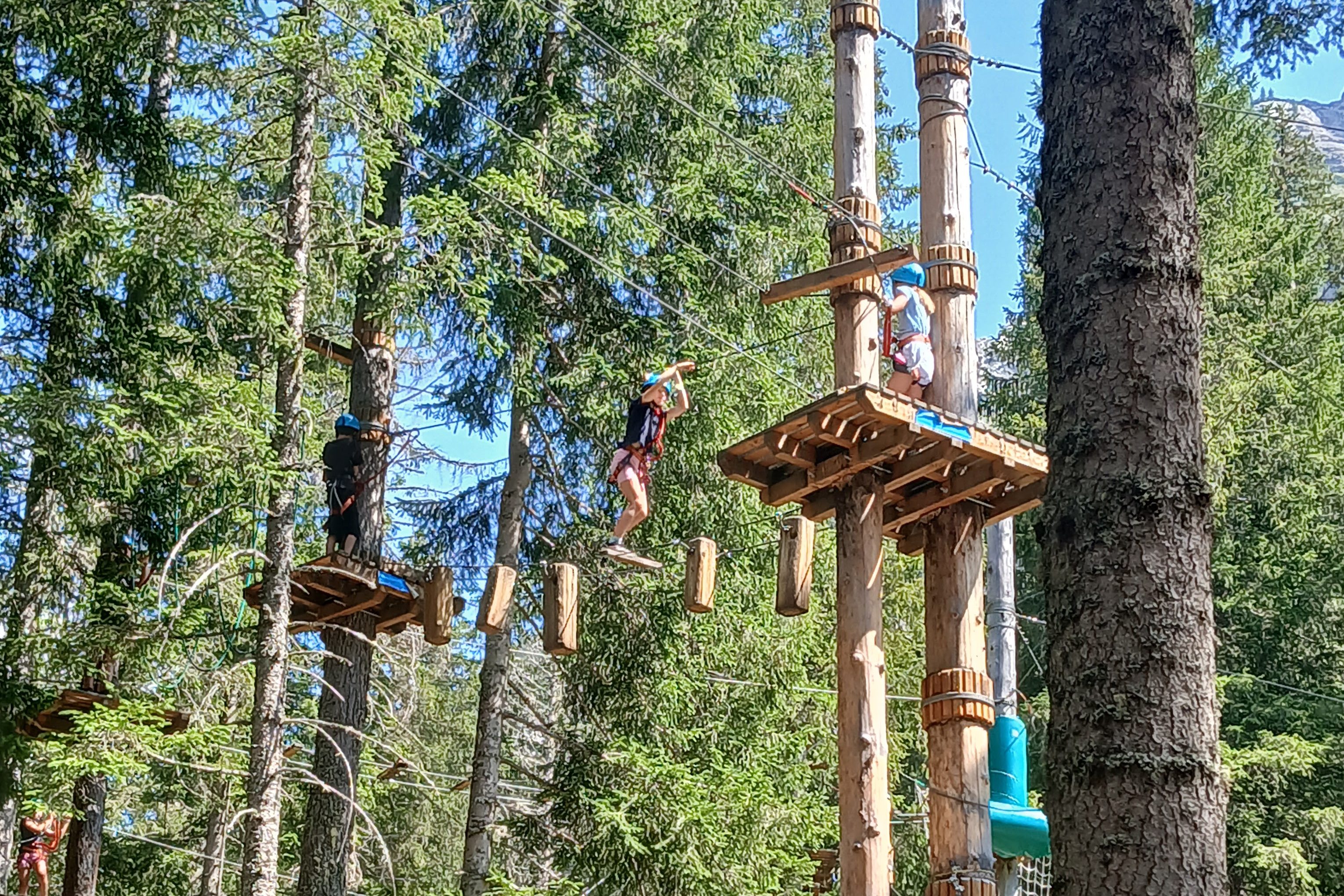
Civetta Adventure Park
Pizza at Piani Pezze – delicious

We checked out the Serrai di Sottoguda, and while it’s a pleasant walk with a well-made path, I wouldn’t call it a must-do. The queue can get quite long, and honestly, the surrounding area offers views that are just as (if not more) impressive without the wait. If you’re planning your itinerary, I’d suggest saving your time for other nearby spots that give you more wow factor for your morning.


Slovenia – Ljubljana (1 night)

We only had one night to spare before heading to Lake Bled, so we booked an Airbnb near Ljubljana. At first, I wondered if we’d given ourselves enough time in the city—but one afternoon in Ljubljana turned out to be perfect for us. The Slovenian capital is small, charming, and easy to explore on foot, with a relaxed, welcoming vibe.

We spent the day wandering through Ljubljana’s historic Old Town, admiring the pretty streets and river views, stopping for some delicious Slovenian food, and—of course—enjoying locally made ice cream. If you’re traveling through Slovenia, even a short visit to Ljubljana is absolutely worth it.

For dinner, we tried Moji Struklji Slovenije, a restaurant highly recommended by our Airbnb host. The food was incredible, and they even offer vegan options, making it a great spot for all types of travellers.
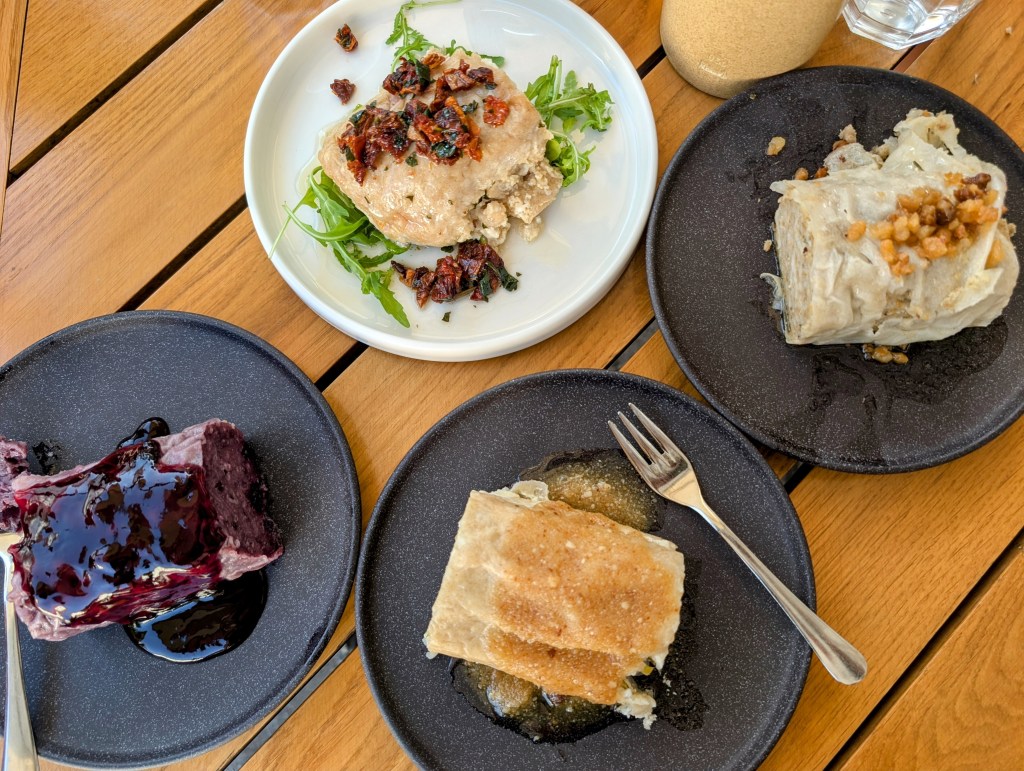
Struklji at Moji Struklji Slovenije

Lakes and lakes (4 nights)

Visiting Lake Bled: The Perfect Mix of Relaxation and Adventure

Our final stop in Slovenia was Lake Bled, and it turned out to be the ideal combination of relaxation and outdoor adventure. The lake is every bit as stunning as the photos suggest—crystal-clear water, calm and inviting, and surprisingly not too cold for swimming despite its glacial origins.

We stayed at a campsite on the lakefront, which had one unbeatable advantage: I could slip out early in the morning, while everyone else was still asleep, and enjoy a peaceful swim with the entire lake to myself. The campsite itself wasn’t my favourite, but with a location like that, it was hard to complain.

⚠️ Travel tip: Lake Bled gets incredibly busy during the day, especially in summer. To avoid the crowds, try arriving early in the morning or later in the evening for a quieter experience.

Things to Do Around Lake Bled and in the local area

We had three full days to explore, which gave us the chance to enjoy some of the best things to do in Lake Bled and around:

Walk around Lake Bled – The loop around the lake is easy, scenic, and perfect for stopping at different swimming spots along the way.

Relax at a Lido – We stumbled upon a lakeside Lido area, which was perfect for families it was 45 euros for all of us (but the price goes down after 3pm. The kids loved the diving boards and slide, while we enjoyed the laid-back atmosphere.

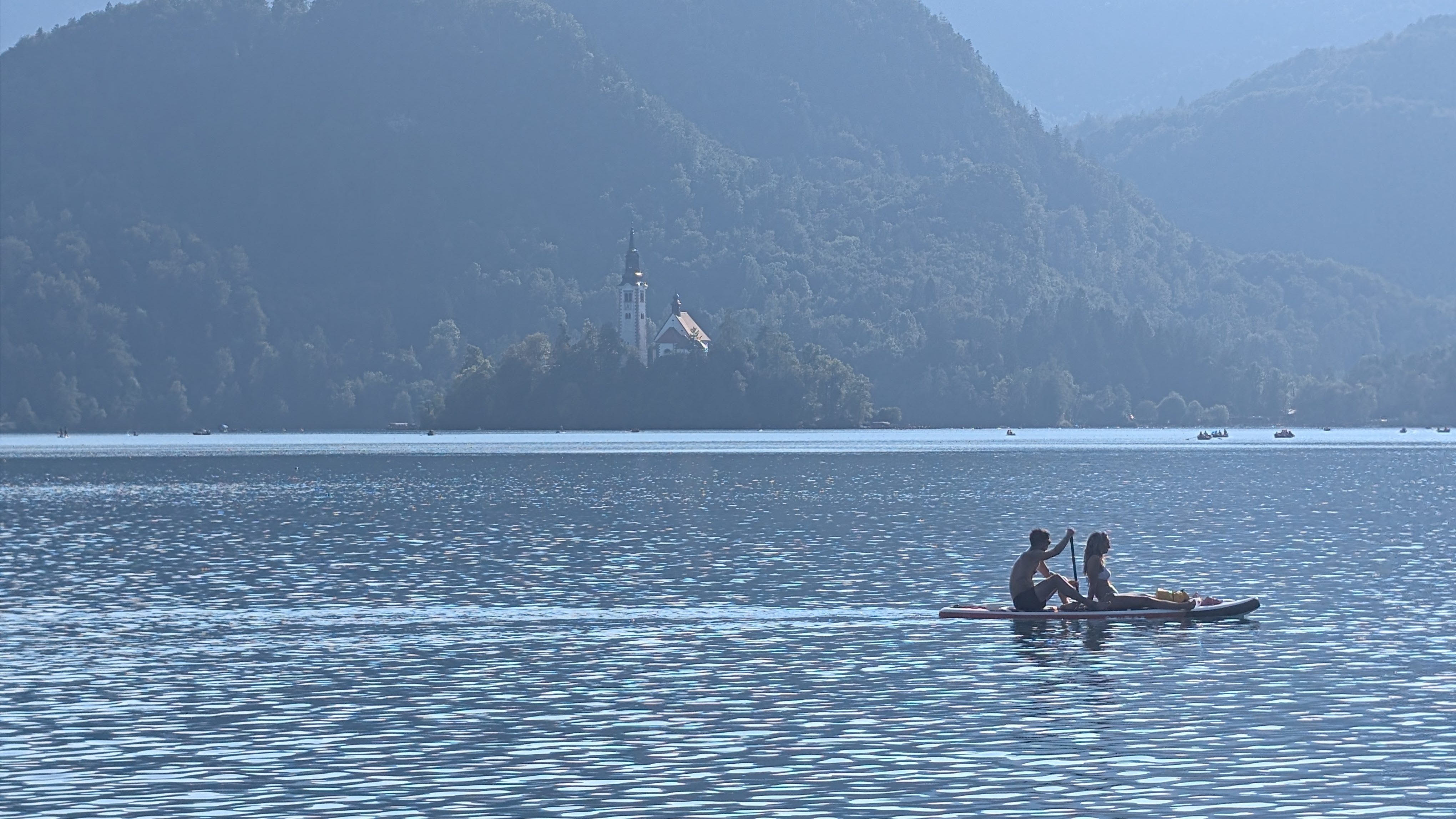
Hire a paddle board This is a great way to get away from the crowds on the lake. Once away from the shore the lake is much less busy and you can appreciate the beauty and tranquillity of the lake. The cost is 15 euros an hour.
Ride the toboggan – This is a pretty cool activity if you fancy a break from the lake. The Toboggan is a short drive away, kids under 6 are free and it’s great fun!

Swim in Lake Bohinj – We loved this. There are car parks around the lake and it wasn’t difficult to park, although it is busy (there’s a theme here!). The lake is beautiful, clear and less crowded than Lake Bled. There are also campsites on the banks of the lake and are much less commercial (and much more basic) than the ones around Lake Bled. If that’s your vibe then they’re worth checking out.
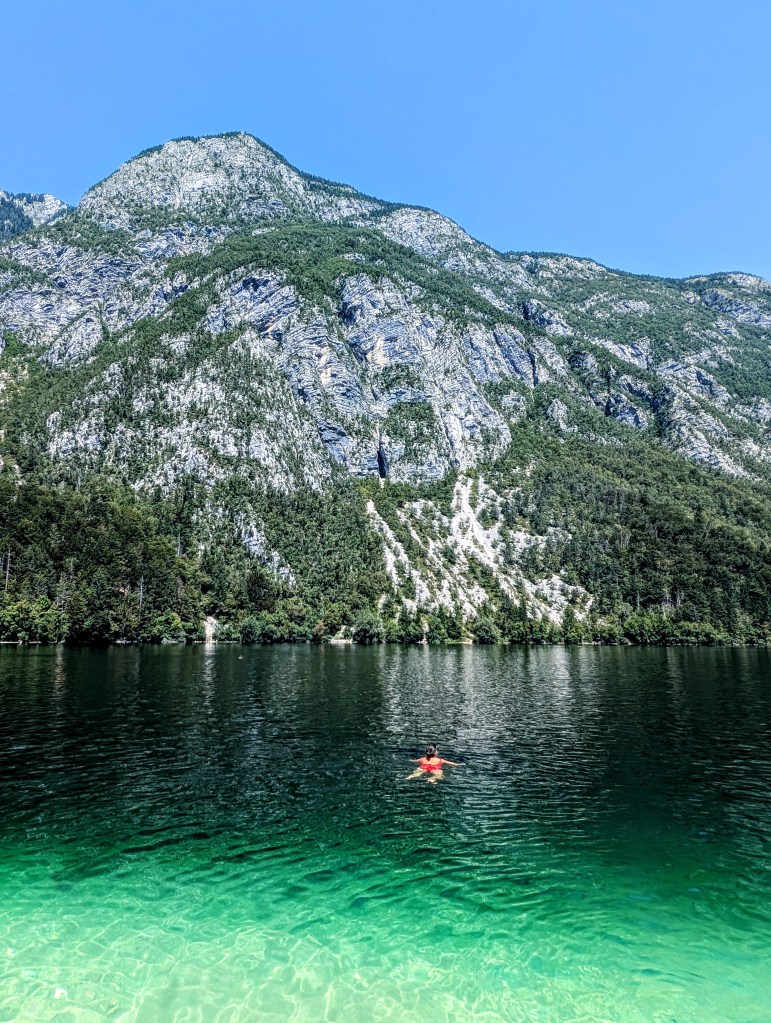
Swimming in Lake Bohinj Slovenia.

Tip: Avoid peak hours to beat the crowds and stock up at local shops for picnic lunches.


Conclusion: Why Family Camping in Europe Works

Another month of family camping in Europe is behind us, and honestly, my love for it feels completely renewed. After a few years of chasing long-haul adventures, I’d started to wonder if our camping days were fading into the past—but this trip reminded me just how much I adore it.

What an adventure it’s been: hopping between islands, lazing on beaches, winding through mountain roads, and swimming in alpine lakes. The sheer variety Europe offers never stops amazing me. It’s such a patchwork of landscapes, languages, histories, and traditions—you could spend a lifetime exploring and still only scratch the surface. (Though thanks to Brexit, we’re limited to 90 days at a time… sigh.)

Travel tip: If you’ve been thinking about a trip like this, my advice is simple—go for it. We’ve been camping for years, but I promise we are far from polished. We’re the kind of people currently holding our car and windscreen wiper together with brown tape. We wing it more often than not, and somehow it still works out. That’s the beauty of camping—it doesn’t have to be fancy, and it’s one of the most affordable ways to see so many incredible places.

So if you’re sitting there wondering whether you could pull it off, trust me, you can. And if you’ve got questions or need a little encouragement, I’d love to help—just reach out!


Further reading..

10 Great Things to Do When Camping in Croyde

Follow our travels on Instagram

Like so many others, we’ve been coming to Croyde in North Devon for years. We’ve experienced it all—first as carefree twentysomethings, then as parents of little kids, and now as part of a group of families with slightly older children. As you’ve probably gathered from this blog, we’re big fans of camping, and Croyde has always been one of our top spots for camping, surfing, and seaside adventures.

With its golden beaches, dramatic cliffs, and laid-back surf village vibe, it’s a place that really has something for everyone. Our kids adore it, and we always stay in the same spot, following a familiar little routine of favourite things to do. Not many places tempt us back again and again—especially with the same activities—but there’s just something magical about this North Devon gem.

So, here’s our list of the 10 things we ALWAYS do whenever we visit Croyde.


1. Walk the Coast Path to Woolacombe

We absolutely love walking the South West Coast Path from Croyde to nearby Woolacombe. The walk itself is pretty gentle, but the views? Absolutely breathtaking. Heading out to Baggy Point, you’ll find some dramatic, sheer cliffs—stunning but high! Hold tightly onto little hands, or you can take the alternative route over the hill.

This walk works for all fitness levels and is perfect for soaking up those panoramic North Devon coastline views. We usually pause for a snack overlooking Putsborough Beach, watching surfers ride the waves below. From there, you can take either the back route or the beach route to Woolacombe—both are gorgeous.

We have a soft spot for the back route because it lets us stop at The Porthole for an incredible scotch egg (and maybe a little can of fizz!). Then it’s pasties and ice cream in Woolacombe before heading back—though, if your legs are protesting, a taxi is always an option!

For some reason our kids never complain on this walk so it’s actually a pleasure and one we will be doing for years to come, no doubt.


2. Treat Yourself to Ice Cream in the Village

When in Devon, right?! Croyde village is packed with ice cream parlours serving every flavour under the sun. It’s one of those holiday “must-dos” (okay, maybe a little over-the-top), but after a day of surfing, bodyboarding, or just flinging yourself into the waves, a little sweet treat feels like a reward from the universe. And yes, sometimes we go rogue and add a dollop of clotted cream on top. Totally unnecessary, completely delicious, and zero regrets.


3. Surf, Bodyboard or just jump waves at Croyde Bay

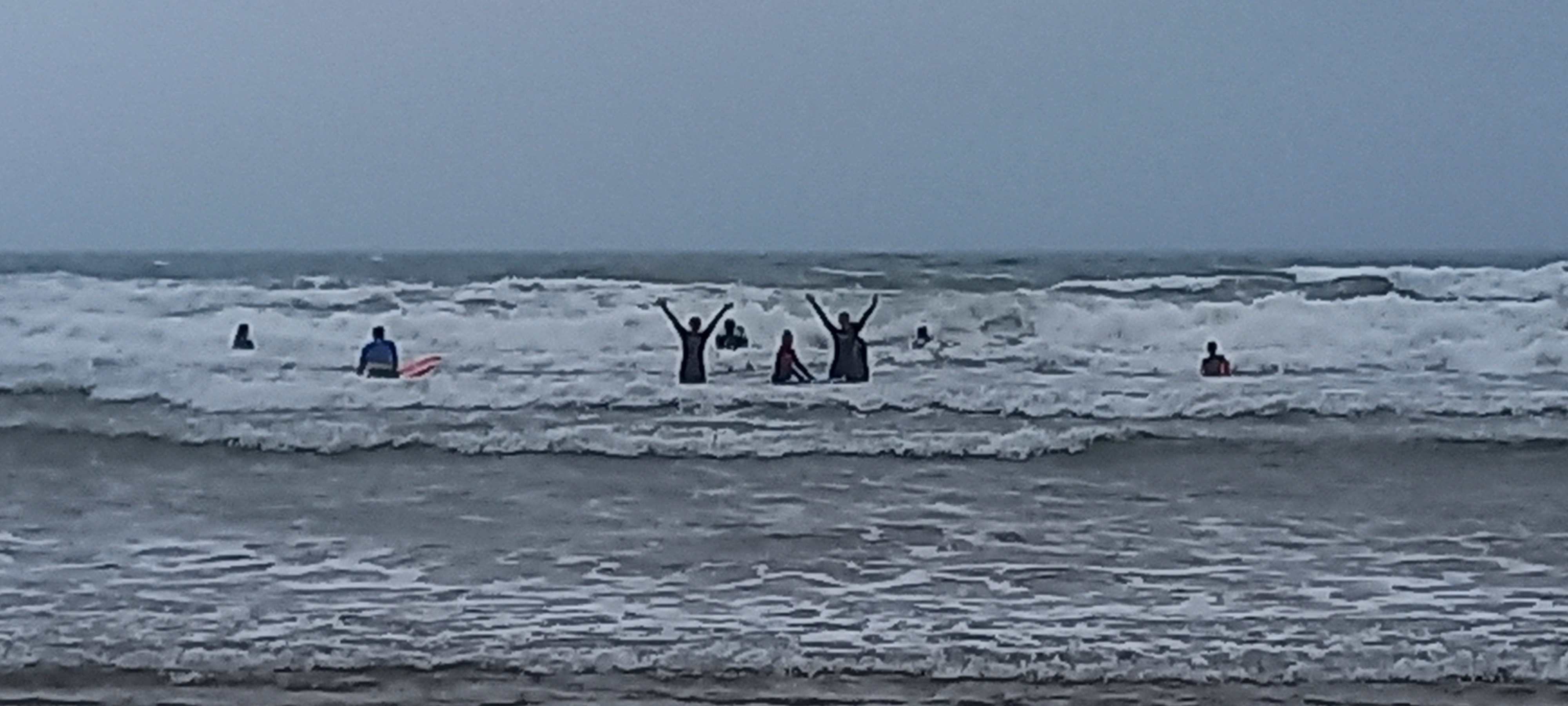
Croyde Bay is famous for its waves—and trust us, they do not disappoint! Megan is all about surfing, Charlotte loves bodyboarding, and Reuben just can’t get enough of jumping the waves, so there’s something for everyone. The waves are an absolute blast and a fun (and super cheap!) way to spend a day. Just don’t forget the beach snacks, buckets and spades, and a trusty windbreak—it can get pretty gusty out there, and a good windbreak makes all the difference for a long, happy beach day.

On our most recent trip, the beach was closed a couple of times because of rough sea conditions. It’s always amazing to watch the waves when they’re particularly dramatic—but remember, safety first. Never venture in when it’s not advised, no matter how tempting those perfect waves look!


4. Feast on Fresh Pasties

A classic Devon treat! I actually think I’ve become more committed to regular pasty lunches over the years. I absolutely love pasties and a little break to Devon is the perfect excuse to eat lots of them! My personal favourite is the vegan steak pasty from The Hub in Croyde village. There are quite a few vegan options these days, which is great for us!


5. Visit The Hideout Café

I think that Croyde has changed quite a bit over the last few years and whilst some may complain about the development of this little Devon hideaway, I think it’s come with some great additions, one of which is the Hideout. You get to the Hideout through the Hub pasty shop. I love the cocktails, and the fact I can get a bucket!! the Pornstar Martini and Mai tai are my favourites. We usually tuck into pasties, share a bucket or two, then wander back to camp for cream tea and stargazing. Wonderful.


6. Enjoy a Traditional Cream Tea

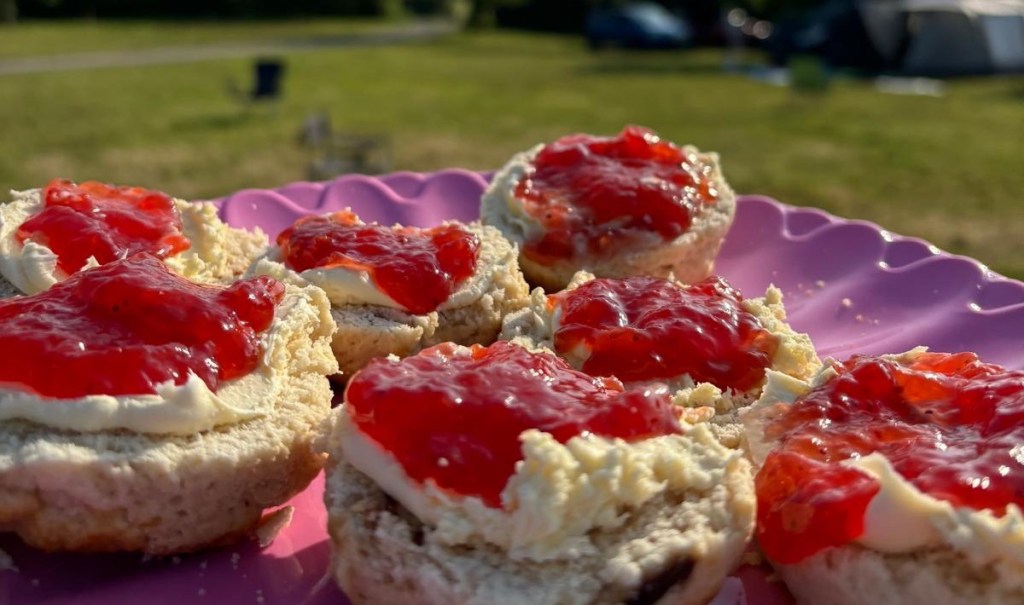
If there’s one thing you have to tick off your North Devon list, it’s a cream tea in Croyde. After a morning of waves, walks, or sand between your toes, nothing hits the spot quite like a scone (scone like own or scone like gone?) loaded up with clotted cream and jam. We usually buy our own from the village to eat outside the tent in the sunshine (hopefully). Just be warned: you’ll have to pick a side in the age-old debate—cream first or jam first? (Devon says cream first, but we’ll let you decide…).


7. Explore Baggy Point

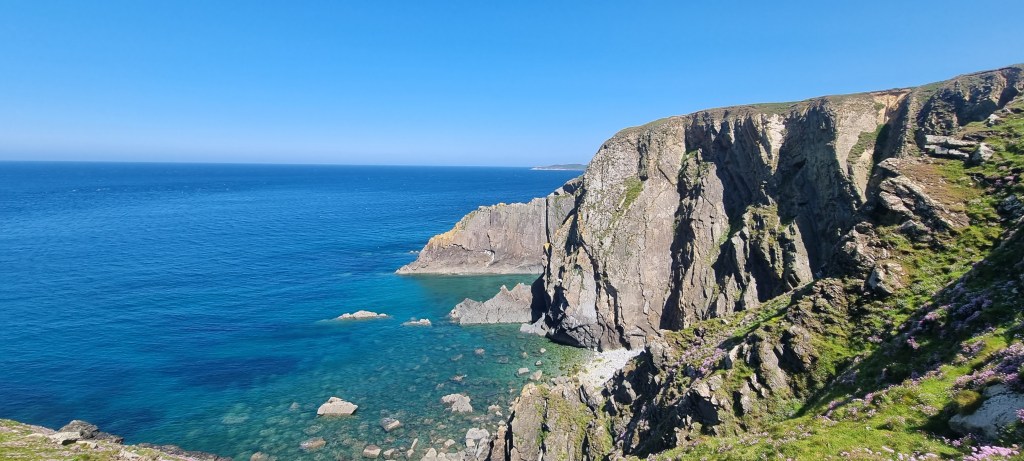
If you’re not up for trekking all the way to Woolacombe but still want a dose of North Devon’s incredible coastal views, Baggy Point is the perfect spot. I absolutely love wandering its trails—they’re just right whether you’re a serious hiker or fancy a gentle stroll. Keep your eyes peeled for seals bobbing in the waves or seabirds swooping overhead, and don’t forget your camera—the endless stretch of sparkling ocean is impossible not to photograph.

It’s also a brilliant place to pause for a picnic, take a deep breath of that fresh, salty sea air, and just soak it all in. Every time I visit, I’m reminded how stunning the British coastline is. And I love that Baggy Point has been cared for by the National Trust since 1939—knowing it’s protected for generations to come.


8. Rock-pooling

We first got into rockpooling in Croyde when the kids were little, mostly as a backup plan for those days when the sun was more reluctant to come out. Even now, they still get so excited spotting crabs, tiny fish, and all sorts of little creatures in the rock pools when the tide goes out. The best thing about Croyde is that the tide retreats so far that there are hours of entertainment right there for free!.

It’s not just fun—it’s also a brilliant way for kids (and adults!) to learn about the sea and the animals that live there. And of course, the golden rule: leave everything where you find it. Watching the kids marvel at creatures in their natural habitat is far more rewarding than bringing them home in a bucket!


9. Try Dune Surfing

My kids love a dune surf and the sand dunes behind Croyde Bay provide an excellent dune surfing run! Bring a bodyboard or even a piece of cardboard to slide down the dunes.


10. Stargaze from Your Tent

One of the best things about camping in Croyde has to be the stargazing. With no city lights around, the night sky feels bigger, brighter, and just a little bit magical. It always makes me stop and think how beautiful (and how humbling!) it all is—something we often forget when we’re wrapped up in everyday life.

And honestly? Some of my favourite starry moments have happened after those classic middle-of-the-night camping loo trips. You step outside, bleary-eyed, and suddenly you’re wide awake, standing under a sky full of stars with only the sound of the waves in the background. It’s the kind of simple magic that makes camping here so special.


Final thoughts

Croyde has this incredible ability to feel familiar and new at the same time. No matter how many times we visit, there’s always something to discover. For all the travelling we do, our kids love this place and keep wanting to come back again and again. It’s a place that lets you slow down, enjoy simple pleasures, and make memories that stick—whether you’re a couple, a group of friends, or a family like ours. For us, it’s more than just a holiday spot; it’s a little tradition, a go-to escape where the sea, sand, and sunsets never fail to remind us why we keep coming back. Croyde isn’t just somewhere you visit—it’s somewhere you return to, again and again.

10 Great Things to Do When Camping in Croyde

Like so many others, we’ve been coming to Croyde in North Devon for years. We’ve experienced it all—first as carefree twentysomethings, then as parents of little kids, and now as part of a group of families with slightly older children. As you’ve probably gathered from this blog, we’re big fans of camping, and Croyde has always been one of our top spots for camping, surfing, and seaside adventures.

With its golden beaches, dramatic cliffs, and laid-back surf village vibe, it’s a place that really has something for everyone. Our kids adore it, and we always stay in the same spot, following a familiar little routine of favourite things to do. Not many places tempt us back again and again—especially with the same activities—but there’s just something magical about this North Devon gem.

So, here’s our list of the 10 things we ALWAYS do whenever we visit Croyde.


1. Walk the Coast Path to Woolacombe

We absolutely love walking the South West Coast Path from Croyde to nearby Woolacombe. The walk itself is pretty gentle, but the views? Absolutely breathtaking. Heading out to Baggy Point, you’ll find some dramatic, sheer cliffs—stunning but high! Hold tightly onto little hands, or you can take the alternative route over the hill.

This walk works for all fitness levels and is perfect for soaking up those panoramic North Devon coastline views. We usually pause for a snack overlooking Putsborough Beach, watching surfers ride the waves below. From there, you can take either the back route or the beach route to Woolacombe—both are gorgeous.

We have a soft spot for the back route because it lets us stop at The Porthole for an incredible scotch egg (and maybe a little can of fizz!). Then it’s pasties and ice cream in Woolacombe before heading back—though, if your legs are protesting, a taxi is always an option!

For some reason our kids never complain on this walk so it’s actually a pleasure and one we will be doing for years to come, no doubt.


2. Treat Yourself to Ice Cream in the Village

When in Devon, right?! Croyde village is packed with ice cream parlours serving every flavour under the sun. It’s one of those holiday “must-dos” (okay, maybe a little over-the-top), but after a day of surfing, bodyboarding, or just flinging yourself into the waves, a little sweet treat feels like a reward from the universe. And yes, sometimes we go rogue and add a dollop of clotted cream on top. Totally unnecessary, completely delicious, and zero regrets.


3. Surf, Bodyboard or just jump waves at Croyde Bay

Croyde Bay is famous for its waves—and trust us, they do not disappoint! Megan is all about surfing, Charlotte loves bodyboarding, and Reuben just can’t get enough of jumping the waves, so there’s something for everyone. The waves are an absolute blast and a fun (and super cheap!) way to spend a day. Just don’t forget the beach snacks, buckets and spades, and a trusty windbreak—it can get pretty gusty out there, and a good windbreak makes all the difference for a long, happy beach day.

On our most recent trip, the beach was closed a couple of times because of rough sea conditions. It’s always amazing to watch the waves when they’re particularly dramatic—but remember, safety first. Never venture in when it’s not advised, no matter how tempting those perfect waves look!


4. Feast on Fresh Pasties

A classic Devon treat! I actually think I’ve become more committed to regular pasty lunches over the years. I absolutely love pasties and a little break to Devon is the perfect excuse to eat lots of them! My personal favourite is the vegan steak pasty from The Hub in Croyde village. There are quite a few vegan options these days, which is great for us!


5. Visit The Hideout Café

I think that Croyde has changed quite a bit over the last few years and whilst some may complain about the development of this little Devon hideaway, I think it’s come with some great additions, one of which is the Hideout. You get to the Hideout through the Hub pasty shop. I love the cocktails, and the fact I can get a bucket!! the Pornstar Martini and Mai tai are my favourites. We usually tuck into pasties, share a bucket or two, then wander back to camp for cream tea and stargazing. Wonderful.


6. Enjoy a Traditional Cream Tea

If there’s one thing you have to tick off your North Devon list, it’s a cream tea in Croyde. After a morning of waves, walks, or sand between your toes, nothing hits the spot quite like a scone (scone like own or scone like gone?) loaded up with clotted cream and jam. We usually buy our own from the village to eat outside the tent in the sunshine (hopefully). Just be warned: you’ll have to pick a side in the age-old debate—cream first or jam first? (Devon says cream first, but we’ll let you decide…).


7. Explore Baggy Point

If you’re not up for trekking all the way to Woolacombe but still want a dose of North Devon’s incredible coastal views, Baggy Point is the perfect spot. I absolutely love wandering its trails—they’re just right whether you’re a serious hiker or fancy a gentle stroll. Keep your eyes peeled for seals bobbing in the waves or seabirds swooping overhead, and don’t forget your camera—the endless stretch of sparkling ocean is impossible not to photograph.

It’s also a brilliant place to pause for a picnic, take a deep breath of that fresh, salty sea air, and just soak it all in. Every time I visit, I’m reminded how stunning the British coastline is. And I love that Baggy Point has been cared for by the National Trust since 1939—knowing it’s protected for generations to come.


8. Rock-pooling

We first got into rockpooling in Croyde when the kids were little, mostly as a backup plan for those days when the sun was more reluctant to come out. Even now, they still get so excited spotting crabs, tiny fish, and all sorts of little creatures in the rock pools when the tide goes out. The best thing about Croyde is that the tide retreats so far that there are hours of entertainment right there for free!.

It’s not just fun—it’s also a brilliant way for kids (and adults!) to learn about the sea and the animals that live there. And of course, the golden rule: leave everything where you find it. Watching the kids marvel at creatures in their natural habitat is far more rewarding than bringing them home in a bucket!


9. Try Dune Surfing

My kids love a dune surf and the sand dunes behind Croyde Bay provide an excellent dune surfing run! Bring a bodyboard or even a piece of cardboard to slide down the dunes.


10. Stargaze from Your Tent

One of the best things about camping in Croyde has to be the stargazing. With no city lights around, the night sky feels bigger, brighter, and just a little bit magical. It always makes me stop and think how beautiful (and how humbling!) it all is—something we often forget when we’re wrapped up in everyday life.

And honestly? Some of my favourite starry moments have happened after those classic middle-of-the-night camping loo trips. You step outside, bleary-eyed, and suddenly you’re wide awake, standing under a sky full of stars with only the sound of the waves in the background. It’s the kind of simple magic that makes camping here so special.


Final thoughts

Croyde has this incredible ability to feel familiar and new at the same time. No matter how many times we visit, there’s always something to discover. For all the travelling we do, our kids love this place and keep wanting to come back again and again. It’s a place that lets you slow down, enjoy simple pleasures, and make memories that stick—whether you’re a couple, a group of friends, or a family like ours. For us, it’s more than just a holiday spot; it’s a little tradition, a go-to escape where the sea, sand, and sunsets never fail to remind us why we keep coming back. Croyde isn’t just somewhere you visit—it’s somewhere you return to, again and again.

Five Months Family Backpacking in Asia

How We Did It, What We Learned, and Why You Can Too

Follow our travels on instagram

In 2022, our family pressed pause on everyday life to embark on an unforgettable five-month backpacking adventure across Asia with our three children. We left our jobs, took the kids out of school, rented out our house, and swapped daily routines for street food, tuk-tuks, and adventure.

From exploring ancient temples in Cambodia to hiking volcanoes in Indonesia, and from the bustling street markets of Vietnam to the tranquil beaches of Sri Lanka, this journey was more than a holiday—it was a life-changing family travel experience filled with learning, growth, and connection.

Whether you’re dreaming of long-term family travel in Asia or wondering how to make it happen, here’s everything we learned after five incredible months of travelling Asia with kids.

How We Balanced Family Travel and Education

One of our biggest concerns before leaving was how the children’s education would be affected. Taking them out of school for five months felt risky, but the reality was different. Travel became their classroom—immersive, hands-on, and full of real-world lessons. Our children didn’t just read about history or geography—they experienced it first-hand. They learned to surf, scuba dive and swim (for Charlotte who was just 5), they saw wildlife beyond anything they could’ve imagined, they saw the devastating impact of palm oil plantations, learnt about the 2005 tsunami in Banda Aceh, experienced history and religion through visiting temples, mosques and hearing the call to prayer, learnt new languages, used different currencies and experiences a vast array of different foods.

Countries Explored on Our Asian Family Backpacking Trip

Our itinerary included:

  • Thailand
  • Cambodia
  • Indonesia
  • Malaysia
  • South Korea
  • Vietnam
  • Sri Lanka

Each destination offered unique cultural experiences, breathtaking landscapes, delicious local cuisine, and countless unforgettable moments. From temple-hopping in Cambodia to watching sunrises over Indonesian volcanoes, every day was a new adventure. Of course there were things that didn’t go quite to plan (not that we had much of a plan) but embracing the flexibility of lack of organisation meant that we were able to adapt and some of these have become some of our best stories.

More than just a trip, it was a chance to reconnect and see the world (and each other) in a whole new way. The kids learned more in those five months than they ever could have from textbooks—and so did we.

Here are some of our takeaways from the whole process of planning our trip and spending 5 months travelling it!

Why Long-Term Family Travel in Asia is Possible for You

Many people told us, “Wow, it’s incredible you did that!” Our answer: you can do it too.

You don’t need to travel non-stop like we did to have a transformative experience. Even shorter or slower trips can provide fresh perspectives and strengthen family bonds.

If you’re a working parent in the UK, remember you can take up to up to 4 weeks of unpaid parental leave per child per year?, a great opportunity to travel without leaving your job.

We funded our trip partly by renting our home on Airbnb and borrowing against our house. While we didn’t earn money on the road, many families work remotely nowadays, making long-term travel even more feasible.

The bottom line? If this has been on your mind—even as a distant “maybe one day” dream—it’s more doable than you think.

Flexibility: The Key to Successful Family Backpacking in Asia

We’re not exactly known for our planning skills—which, sure, can make things a bit chaotic—but it also means we’re pretty good at rolling with the punches. We kicked off our trip with nothing more than a one-way ticket to Bangkok and a couple of nights booked at a hotel. Luckily, Thailand is perfect for spontaneous travellers—there’s always a bus leaving tomorrow, and last-minute plans are expected. That flexibility quickly became more than just convenient; it turned into a survival skill. When we landed in the Philippines, we found out a tropical cyclone was heading straight for us. Twenty-four hours later? We were sipping soju in South Korea, diving headfirst into an incredible (and completely unplanned) two-week adventure.

Planning a five-month trip in detail? For us, it’s impossible. The places you expect to breeze through often capture your heart, while those picture-perfect beaches you dreamed of might fall short. But if you give yourself the freedom to change course along the way, you’ll stumble upon unexpected gems—people, places, and meals you never imagined you’d find.

How Our Kids Adapted to Long-Term Travel and Schooling

I was really anxious about taking the kids away for five months, especially with the huge disruption to their schooling and social lives. I worried about how they’d handle the change, how they’d fall behind in school, and whether they’d struggle with feeling isolated from their friends and familiar routines. I kept imagining them feeling homesick or out of place, unsure of how to adjust. But as it turns out, they were totally fine. They adapted so well to the new environments, making connections easily and approaching it with curiosity. Their resilience amazed me, and I realised that sometimes we overestimate the emotional weight of change, only to find that kids are incredibly adaptable when given the right support.

What is Worldschooling? How We Learned Through Travel

I’m not a fan of the word but I really do believe in the philosophy around worldschooling. Worldschooling is an approach to education rooted in curiosity, flexibility, and firsthand experience. Instead of confining learning to a classroom, it allows the world itself to become the curriculum. Our kids studied ancient history by walking through the ruins of Angkor Wat, learnt about ecology by observing wildlife in the wild as well as learning to to snorkel, swim and scuba dive. It’s not about escaping structure but about reimagining it—learning maths through budgeting travel, empathy and tolerance through cross-cultural connection. Worldschooling doesn’t promise a perfect education, but it offers a living one—where lessons aren’t just absorbed, they’re lived.

Final Thoughts on Family Backpacking in Asia

If you’ve been dreaming of family backpacking trips in Asia or wondering how to balance travel with parenting and education, know this: it’s more possible than you think.

With an open mind, flexibility, and a bit of planning, your family can create unforgettable memories, learn together, and see the world from a new perspective.

Five Months Family Backpacking in Asia

How We Did It, What We Learned, and Why You Can Too

In 2022, our family pressed pause on everyday life to embark on an unforgettable five-month backpacking adventure across Asia with our three children. We left our jobs, took the kids out of school, rented out our house, and swapped daily routines for street food, tuk-tuks, and adventure.

From exploring ancient temples in Cambodia to hiking volcanoes in Indonesia, and from the bustling street markets of Vietnam to the tranquil beaches of Sri Lanka, this journey was more than a holiday—it was a life-changing family travel experience filled with learning, growth, and connection.

Whether you’re dreaming of long-term family travel in Asia or wondering how to make it happen, here’s everything we learned after five incredible months of travelling Asia with kids.

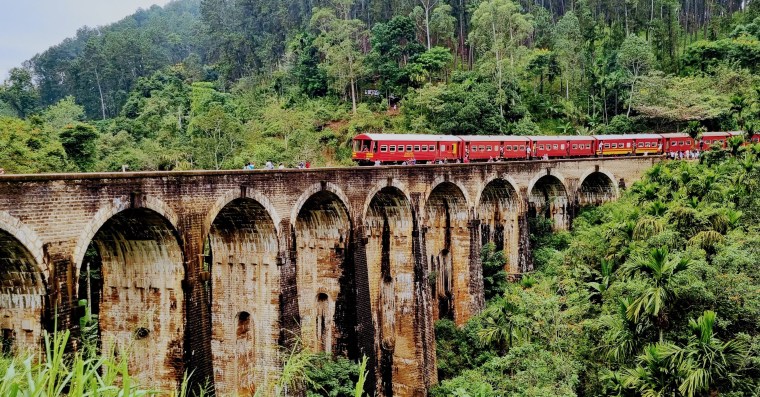
Train on the Nine Arch Bridge, Sri Lanka

How We Balanced Family Travel and Education

One of our biggest concerns before leaving was how the children’s education would be affected. Taking them out of school for five months felt risky, but the reality was different. Travel became their classroom—immersive, hands-on, and full of real-world lessons. Our children didn’t just read about history or geography—they experienced it first-hand. They learned to surf, scuba dive and swim (for Charlotte who was just 5), they saw wildlife beyond anything they could’ve imagined, they saw the devastating impact of palm oil plantations, learnt about the 2004 tsunami in Banda Aceh, experienced history and religion through visiting temples, mosques and hearing the call to prayer, learnt new languages, used different currencies and experiences a vast array of different foods.

A boat on top of a house from the 2004 tsunami in Sumatra

Countries Explored on Our Asian Family Backpacking Trip

Our itinerary included:

  • Thailand
  • Cambodia
  • Indonesia
  • Malaysia
  • South Korea
  • Vietnam
  • Sri Lanka

Each destination offered unique cultural experiences, breathtaking landscapes, delicious local cuisine, and countless unforgettable moments. From temple-hopping in Cambodia to watching sunrises over Indonesian volcanoes, every day was a new adventure. Of course there were things that didn’t go quite to plan (not that we had much of a plan) but embracing the flexibility of lack of organisation meant that we were able to adapt and some of these have become some of our best stories.

More than just a trip, it was a chance to reconnect and see the world (and each other) in a whole new way. The kids learned more in those five months than they ever could have from textbooks—and so did we.

Here are some of our takeaways from the whole process of planning our trip and spending 5 months travelling it!

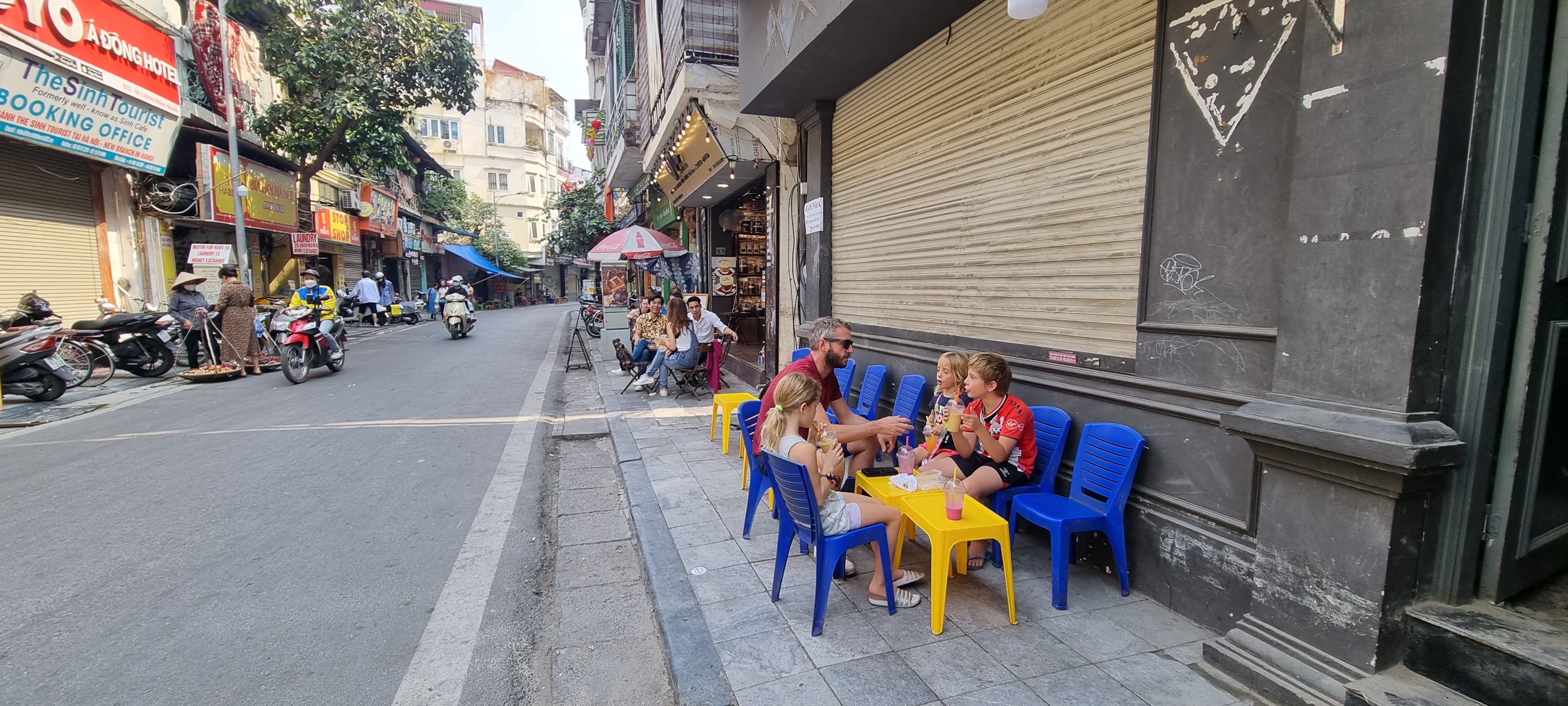
Street smoothies in Hanoi

Why Long-Term Family Travel in Asia is Possible for You

Many people told us, “Wow, it’s incredible you did that!” Our answer: you can do it too.

You don’t need to travel non-stop like we did to have a transformative experience. Even shorter or slower trips can provide fresh perspectives and can be incredible, life changing experiences.

If you’re a working parent in the UK, remember you can take up to up to 4 weeks of unpaid parental leave per child per year?, a great opportunity to travel without leaving your job.

We funded our trip partly by renting our home on Airbnb and borrowing against our house. While we didn’t earn money on the road, many families work remotely nowadays, making long-term travel even more feasible.

The bottom line? If this has been on your mind—even as a distant “maybe one day” dream—it’s more doable than you think.

Flexibility: The Key to Successful Family Backpacking in Asia

We’re not exactly known for our planning skills—which, sure, can make things a bit chaotic—but it also means we’re pretty good at rolling with the punches. We kicked off our trip with nothing more than a one-way ticket to Bangkok and a couple of nights booked at a hotel. Luckily, Thailand is perfect for spontaneous travellers—there’s always a bus leaving tomorrow, and last-minute plans are expected. That flexibility quickly became more than just convenient; it turned into a survival skill. When we landed in the Philippines, we found out a tropical cyclone was heading straight for us. Twenty-four hours later? We were sipping soju in South Korea, diving headfirst into an incredible (and completely unplanned) two-week adventure.

Old and new Suwon, Korea

Planning a five-month trip in detail? For us, it’s impossible. The places you expect to breeze through often capture your heart, while those picture-perfect beaches you dreamed of might fall short. But if you give yourself the freedom to change course along the way, you’ll stumble upon unexpected gems—people, places, and meals you never imagined you’d find.

How Our Kids Adapted to Long-Term Travel and Schooling

I was really anxious about taking the kids away for five months, especially with the huge disruption to their schooling and social lives. I worried about how they’d handle the change, how they’d fall behind in school, and whether they’d struggle with feeling isolated from their friends and familiar routines. I kept imagining them feeling homesick or out of place, unsure of how to adjust. But as it turns out, they were totally fine. They adapted so well to the new environments, making connections easily and approaching it with curiosity. Their resilience amazed me, and I realised that sometimes we overestimate the emotional weight of change, only to find that kids are incredibly adaptable when given the right support.

What is Worldschooling? How We Learned Through Travel

I’m not a fan of the word but I really do believe in the philosophy around worldschooling. Worldschooling is an approach to education rooted in curiosity, flexibility, and firsthand experience. Instead of confining learning to a classroom, it allows the world itself to become the curriculum. Our kids studied ancient history by walking through the ruins of Angkor Wat, learnt about ecology by observing wildlife in the wild as well as learning to to snorkel, swim and scuba dive. It’s not about escaping structure but about reimagining it—learning maths through budgeting travel, empathy and tolerance through cross-cultural connection. Worldschooling doesn’t promise a perfect education, but it offers a living one—where lessons aren’t just absorbed, they’re lived.

Wandering the streets of Seoul, Korea

Final Thoughts on Family Backpacking in Asia

If you’ve been dreaming of family backpacking trips in Asia or wondering how to balance travel with parenting and education, know this: it’s more possible than you think.

With an open mind, flexibility, and a bit of planning, your family can create unforgettable memories, learn together, and see the world from a new perspective.

Unpaid Parental Leave

How We’re Using Unpaid Parental Leave in the UK to Travel (again) as a Family

Follow our travels on Instagram

Planning a family trip using unpaid parental leave? Here’s how we’re doing it—again—after 5 months in Asia, with tips on applying and your rights in the UK.


If you’re a working parent in the UK, chances are you’ve heard of maternity and paternity leave—but what about unpaid parental leave?

It’s a legal right in the UK that many parents aren’t using—and we’re currently in the process of applying for it ourselves. Why? Because after the success of our five-month adventure in Asia, we’ve decided to do it again—this time taking a family trip using unpaid parental leave as part of our plan.

This post covers everything we’ve learned about how to take unpaid parental leave in the UK, especially if you’re considering using it for extended family travel.


What Is Unpaid Parental Leave in the UK?

Unpaid parental leave gives eligible working parents the right to take time off to care for their child. This could be for anything from settling them into childcare to, like us, taking a longer family trip without quitting your job.

Unlike maternity or paternity leave, this time off is unpaid, but your employment rights are protected while you’re away.


Who’s Eligible for Unpaid Parental Leave?

To qualify, you must:

  • Be an employee (not freelance or self-employed),
  • Have worked for your employer for at least one year,
  • Have parental responsibility for the child (biological, adoptive, or legal).

If you meet these criteria, you’re legally entitled to unpaid parental leave—regardless of what your company’s internal policies say.


How Much Leave Can You Take?

Here’s what UK law allows:

  • Up to 18 weeks unpaid leave per child (before they turn 18),
  • A maximum of 4 weeks per child per year (unless your employer agrees to more),
  • Usually taken in whole weeks, not single days (unless your child is disabled or your employer allows it).

We’re using several weeks next year to extend our family travel plans, without draining our annual leave or risking our jobs.


How to Apply for Unpaid Parental Leave

We’re currently at this stage—submitting our request.

Here’s how it works:

  1. Give your employer at least 21 days’ written notice, stating the exact dates you plan to take off.
  2. Your employer can postpone the leave for up to six months if your absence would disrupt the business.
  3. They must respond in writing within 7 days if they’re postponing it.
  4. They can’t refuse it outright if you’re eligible.

We recommend starting this conversation as early as possible—especially if you’re planning something like long-term travel or a family career break.


What Happens to Your Job While You’re Away?

Even though the leave is unpaid, your job and employment rights are protected. That means:

  • You’re entitled to return to the same job (or a suitable alternative),
  • You continue to accrue annual leave,
  • And you’re protected from unfair treatment or dismissal due to taking the leave.

Why We’re Taking Parental Leave for Travel—Again

In 2024, we spent five incredible months travelling around Asia as a family. It was eye-opening, grounding, and an experience we’ll never forget. After returning, we knew we wanted to do it again—and thanks to unpaid parental leave, we can.

This time, we’re planning a slightly shorter but equally exciting trip next year, combining unpaid parental leave with some saved annual leave and flexible working options. It’s our way of creating space for meaningful family time while keeping our jobs secure.

Read more about our 5-month Asia trip here


Is It Worth It?

Absolutely Yes—if you can plan for the income gap.

Taking unpaid time off isn’t easy, especially during a cost-of-living crisis. But the chance to break routine and reconnect as a family has been worth every bit of planning.

Whether you’re dreaming of slow travel, navigating childcare changes, or just need time to breathe, unpaid parental leave is a powerful tool.


Final Thoughts + Tips

Unpaid parental leave in the UK is underused but full of potential—especially for parents looking to travel, reset, or spend more time with their kids while they’re still little.

If you’re considering it, here are a few tips:

  • Start conversations with your employer early,
  • Budget for the unpaid time off well in advance,
  • Mix it with other types of leave (e.g. annual leave, flexible hours),
  • Don’t be afraid to use the entitlement—you’ve earned it.

Thinking about taking unpaid parental leave for travel?
Drop a comment or message—I’d love to hear your plans, swap notes, or share more about our process.

Lille Christmas Market 2024: A Magical Family Christmas Getaway from the UK

Follow our travels on instagram

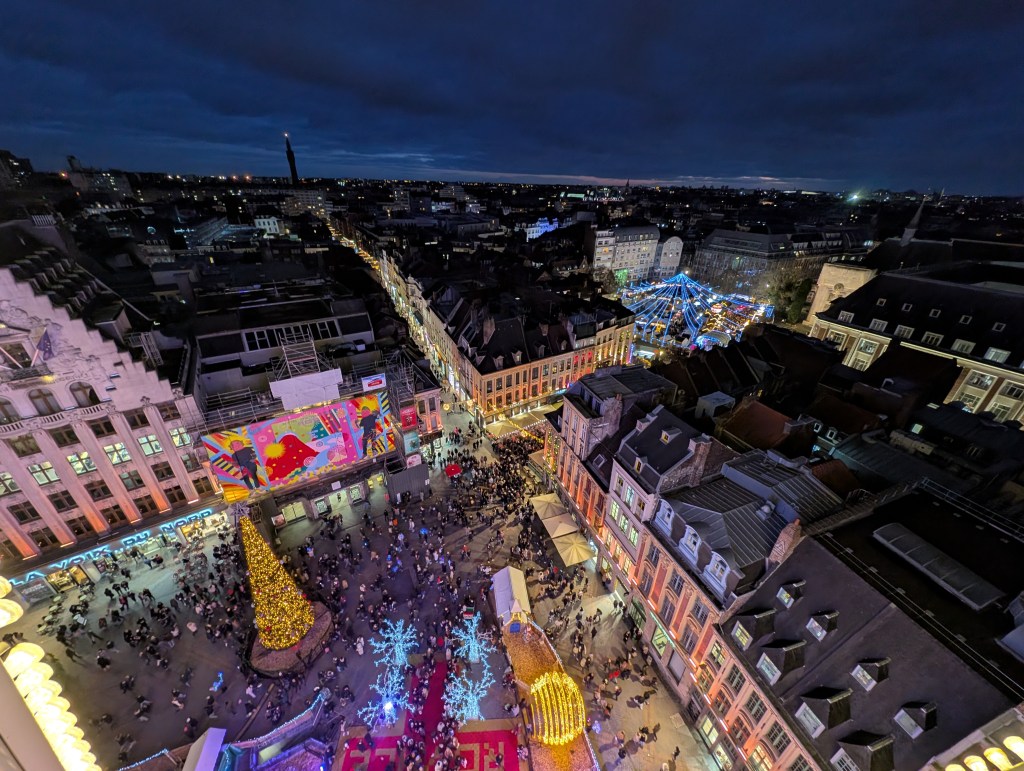
If you’re after a fun and festive way to soak up some Christmas spirit, Lille is a brilliant little getaway—especially since it’s just a short hop from the UK. Right in the heart of the city at Place Rihour, there’s a Christmas market with rows of wooden chalets selling everything from handmade gifts to delicious seasonal treats. Just around the corner in Grand Place, there’s a huge Ferris wheel that gives you amazing views over the city (especially magical at night!).

Our Family Experience in Lille

We went just before Christmas 2024, and it was such a lovely pre-holiday escape. On top of Lille, we also squeezed in quick visits to Ghent and Ypres while we were in the area—both were absolutely worth it.

Lille’s Christmas market isn’t one of the massive ones, so it’s a bit more low-key—which we liked. That said, the market area itself does get pretty packed, as it’s tucked into a fairly small space. Honestly, we enjoyed just wandering around the rest of the city centre more—it’s beautifully lit and feels really festive without being shoulder-to-shoulder crowded. But I’ve got to say, the vin chaud at the market hit the spot, and the kids were all about the hot chocolate and churros. The Ferris wheel was a real highlight—such a fun way to see the city all lit up.

Getting There: We Drove via Le Shuttle

While Lille is easily accessible by Eurostar, we chose to drive from the UK using Le Shuttle through the Channel Tunnel. The journey was straightforward and gave us the flexibility to pack everything we needed for a winter break with kids.

Driving also meant we could explore at our own pace and enjoy the convenience of having our car with us in France. From Calais, Lille is just a 1 hour 15 minute drive, mostly on motorways, making it a great option for families who prefer road trips.

Other Ways to Reach Lille from the UK

If driving isn’t your style, the Eurostar from London St Pancras gets you to Lille in under 90 minutes. It’s a brilliant no-fuss option, dropping you right in the city centre. Alternatively, you could fly into Brussels or Paris and take a connecting train to Lille.

Where to stay: Family Friendly Tips

We booked a central apartment with parking, which was perfect for our needs. Being close to the market meant we could return for breaks, warm up, and prepare simple meals. This flexibility made the whole trip more relaxed, especially with the kids.

While we didn’t find many overtly child-focused restaurants, Lille has plenty of bakeries, crêperies, and brasseries where families are welcome and well-fed.

More Things to do in Lille at Christmas

Outside the market, Vieux Lille (Old Town) is beautiful to explore in winter—cobbled streets, Flemish-style buildings, boutique shops, and cosy cafés await. If you’ve got extra time, consider day trips to Ghent or Ypres, both of which are easy to reach by car or train.

Why is Lille perfect for Family Christmas Break

  • Great base for visiting Northern France and Belgium
  • Safe, walkable city centre ideal for children
  • Traditional market with food, gifts and fun rides
  • Cosy central accomodation with parking options
  • Drive via Le Shuttle or take the Eurostar from London

Full Moon Party – with kids!

Follow our travels on Instagram

Discover how to enjoy Thailand’s Full Moon Party with children. Tips on family-friendly accommodation, activities, and safety for an unforgettable experience.

Okay, I know what you’re thinking — a Full Moon Party and kids? Not exactly a match made in heaven, right? Trust me, I had the same thought. I’d never made it to one in my younger, wilder days, but it always sat on my bucket list. Fast forward to now: I’ve got three kids, questionable stamina, and zero interest in partying until sunrise. So… maybe doing it with the kids was the dream scenario after all?

Of course, there are definitely a few things to keep in mind to make sure everyone has a great (and safe) time. So here’s the lowdown on how we went about it.

location, location, location

This was hands-down our biggest decision: where to stay. We weren’t after the wild backpacker scene, but we also didn’t want to be so far out that getting back meant a late-night transport mission. Too close, though, and we’d risk the Full Moon chaos spilling right onto our doorstep. Oh, and we didn’t want to blow the budget—but we were willing to pay a little extra to tick all the right boxes.

Let’s be real: we don’t always get it right when we travel, but this time? We nailed it. We ended up staying here—and honestly, it was the best decision we could’ve made (even if it was a bit of a lucky guess from our kitchen in Southampton weeks earlier!). The hotel is right on the Full Moon Party beach, but tucked away at the far end, so we had the perfect balance: just a five-minute stroll along the sand to the party, but far enough to escape the chaos when we needed a break.

They were also impressively prepared. We were given wristbands for re-entry, and there was a staff member stationed at the beach entrance to make sure only hotel guests could come through. It felt safe, organised, and just the right kind of buzz. They had a buffet dinner available on the night of the party, already included in the price, and everyone got a drink. I really can’t recommend it enough if you are looking for the same type of thing.

Go early

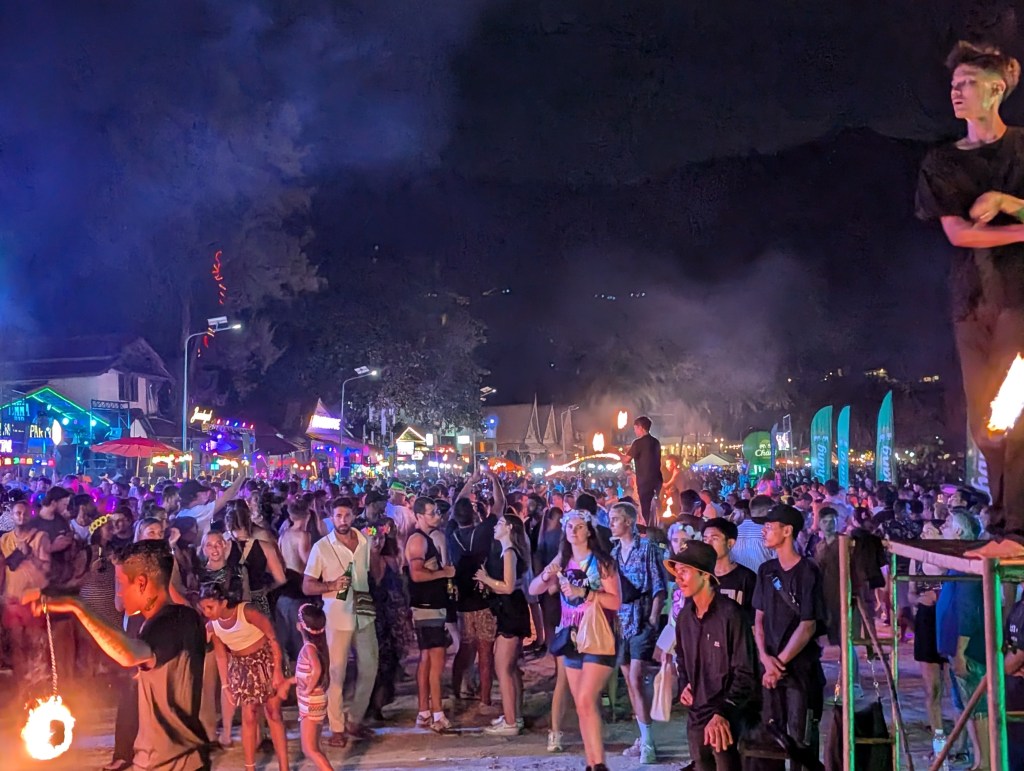
This was actually a really important tip for us, and one I’d definitely pass along to others. We knew we wanted to soak up the atmosphere and enjoy the energy of the night, but at the same time, we were mindful of not exposing the kids to anything too wild—like people who were completely out of it from drinking or drugs. So we planned it carefully: had dinner around 7, then headed to the party between 8 and 9. We stayed until about 11 or midnight. Just as we were leaving, there was a noticeable surge in the crowd—it was already packed, but it was starting to get even more intense. I think we got the timing just right. That said, Megan was definitely hoping to stay a bit longer!

Get T shirts and face paints

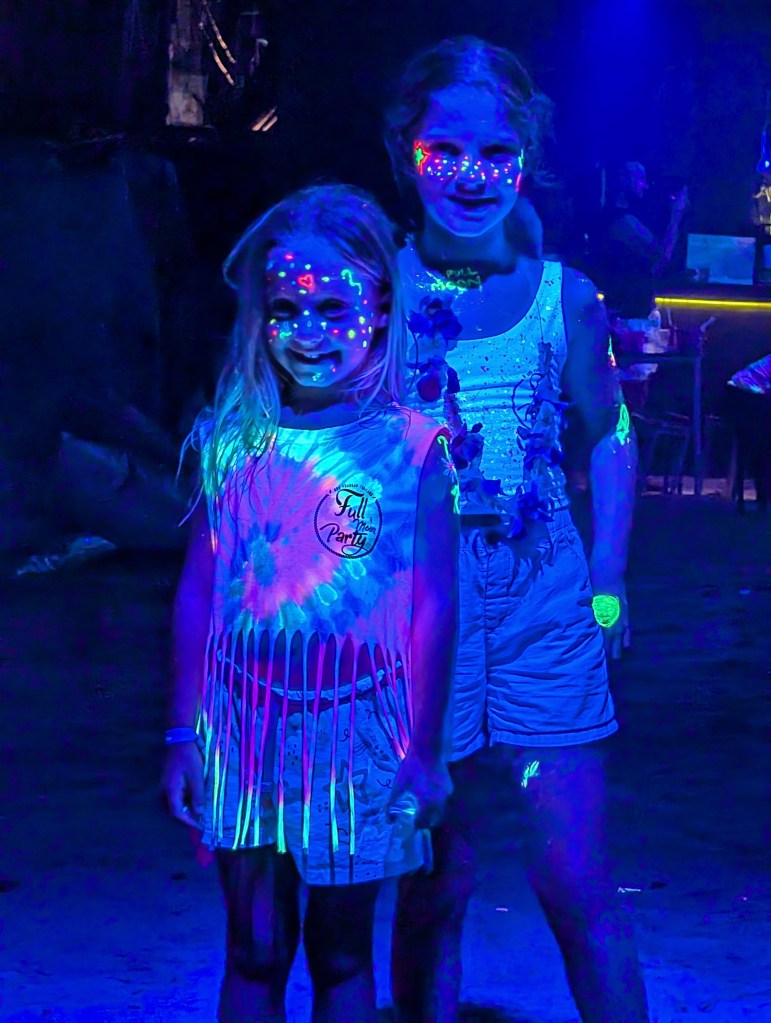
This was one of the most fun and memorable moments of the evening, especially for the kids who fully embraced the experience. We went to the streets just behind the beach, soaked up the pre party vibe and bought Full Moon Party T-shirts for us all. There were also loads of vibrant stalls offering fluorescent face paint—perfect for getting into the spirit of things and fun for the kids. Conveniently, those same stalls also sold the iconic buckets!

Accept that it will be loud

The place we stayed at was great, but it wasn’t completely quiet when we got back to the hotel. As you’re close to the party, you can still hear it. It’s lively—it’s a party atmosphere. While there was no drama or trouble, light sleepers might find it a bit hard to get a good night’s rest.

If you’re on the fence about doing this and wondering whether it’s a good idea, I can confidently say it absolutely is—especially if you plan it right. Our kids had an amazing time, and so did every other child we saw. They felt completely safe, totally happy, and came away with only the best memories of one of the world’s most iconic celebrations. Parenting win? I like to think so. I’m definitely counting on this to earn me some cool mum points down the line!